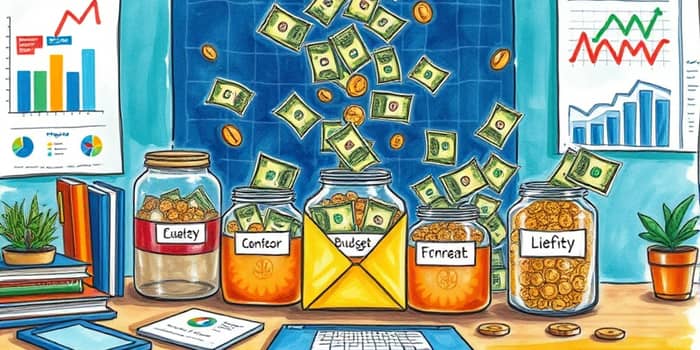
Zero-based budgeting transforms the way organizations and individuals think about money. By consciously assigning every dollar to a specific purpose, you gain unprecedented control, clarity, and confidence over resources. This article explores the core concepts, practical steps, and inspiring benefits of zero-based budgeting, empowering you to harness the full potential of each dollar earned.
What Is Zero-Based Budgeting?
At its core, zero-based budgeting (ZBB) requires teams and individuals to start from a zero base at the beginning of each cycle. Rather than accepting last year’s figures, you rationalize every expense against your current needs and strategy. In corporate settings, ZBB demands that each department build its budget from scratch, evaluating the value and necessity of each activity.
For personal finance, the philosophy takes the form of “give every dollar a job.” You list every income source, then allocate funds across spending, savings, debt repayment, and investing—until your income minus outflows equals zero. The result: no dollar left unassigned, and a clear pathway to financial goals.
The Origins of Zero-Based Budgeting
Zero-based budgeting emerged in the 1970s, popularized by Peter A. Pyhrr of Texas Instruments. Facing rising costs and shifting market conditions, Pyhrr introduced the radical idea that budgets should not be rolled over year to year. Instead, each expense had to be justified anew. Corporations adopted ZBB to combat inflation, align spending with strategic priorities, and eliminate waste.
Decades later, the principle found a second life in personal finance. Modern budgeting tools champion the idea of assigning every dollar to a defined purpose, echoing the corporate model but scaled for individual empowerment. As consumers seek more control over their money, zero-based budgeting offers a disciplined yet flexible framework to succeed.
How Zero-Based Budgeting Works: Corporate Side
Implementing ZBB at an organizational level involves a rigorous yet rewarding process. Below is a streamlined outline of the corporate approach:
- Define strategic goals and priorities—Leadership sets the objectives that will guide all spending decisions.
- Identify decision packages—Break down work into discrete activities and programs that can be individually evaluated.
- Justify every cost from scratch—Managers present rationales tying each expense to a strategic outcome.
- Rank and prioritize spending—Allocate funds starting with the highest-value packages until the budget limit is reached.
- Review and adjust continuously—Monitor performance, adapt to changing conditions, and refine allocations as needed.
How Zero-Based Budgeting Works: Personal Finance Side
On a personal level, zero-based budgeting offers clarity and peace of mind. Follow these key steps to align your money with your life goals:
- Calculate your total monthly income, including side gigs and predictable bonuses.
- List fixed needs, variable wants, debt payments, and savings goals.
- Assign a job to every dollar—distribute income until nothing remains unallocated.
- Track spending in real time, adjusting categories to maintain equilibrium.
- Review and rebuild your budget monthly, ensuring it reflects current priorities.
Core Principles That Drive Impact
The power of zero-based budgeting lies in its guiding philosophy. By embracing these principles, you cultivate robust financial discipline and strategic agility:
- Every expense must be justified—no more automatic rollovers or legacy costs.
- Align spending with priorities—focus resources on highest-impact activities.
- Ensure accountability and ownership—each dollar’s destination is a conscious choice.
- Foster transparency across all levels—open rationales invite scrutiny and improvement.
- Embrace continuous monitoring and iterative reviews to adapt as conditions evolve.
Real-World Benefits and Advantages
Zero-based budgeting consistently delivers tangible results for both organizations and individuals. Companies report significant cost reductions, strategic realignments, and improved resource utilization. In fact, many have seen efficiency gains exceeding forty percent in headcount and production costs by eliminating low-value expenditures.
On the personal front, ZBB transforms financial chaos into a clear plan. You gain:
• A robust emergency fund that’s funded by design, not by accident.
• Gratifying progress toward debt freedom, as every extra dollar is funneled toward repayment.
• Peace of mind that comes from knowing each dollar supports your values and aspirations.
Getting Started: Practical Tips
Embarking on a zero-based budgeting journey can feel daunting, but these practical tips will set you up for success:
1. Choose your tools: Whether a simple spreadsheet or a dedicated app, pick a platform that you’ll use consistently.
2. Build realistic estimates: When income or expenses vary, use conservative averages and adjust mid-cycle.
3. Communicate and collaborate: In a household or corporate team, ensure everyone understands goals and roles.
4. Celebrate small wins: Recognize monthly milestones—an under-budget grocery month or an extra debt payment.
Maintaining Momentum and Growth
Zero-based budgeting is not a one-off exercise. It thrives on continuous learning and adaptation. At the end of each cycle, pause to review what worked and what didn’t. Update your categories to reflect new goals, changing market conditions, or shifts in household needs.
Remember that every adjustment is an opportunity to reinforce intentional choices. By staying vigilant and committed to the process, you create a living budget that grows with you and scales to meet future challenges.
Zero-based budgeting is more than a financial tool—it’s a mindset shift that elevates how we allocate scarce resources. Whether you lead a large enterprise or manage your household’s money, giving every dollar a job yields clarity, control, and confidence. Embrace the discipline of questioning every expense, align your spending with your true priorities, and watch as each dollar becomes a building block toward the life or organization you envision.
References
- https://www.workday.com/en-ch/topics/fpa/what-is-zero-based-budgeting.html
- https://www.prophix.com/blog/zero-based-budgeting-pros-and-cons/
- https://www.prophix.com/blog/what-is-zero-based-budgeting-zbb/
- https://www.workday.com/en-us/topics/fpa/what-is-zero-based-budgeting.html
- https://www.ibm.com/think/topics/zero-based-budgeting
- https://www.centier.com/resources/articles/article-details/money-101--traditional-budgeting-vs-zero-based-budgeting
- https://www.iwillteachyoutoberich.com/zero-based-budgeting/
- https://www.crosscountry-consulting.com/insights/blog/advantages-of-zero-based-budgeting-you-cant-ignore/
- https://www.nerdwallet.com/finance/learn/zero-based-budgeting-explained
- https://paro.ai/blog/advantages-disadvantages-zero-based-budgeting/
- https://www.fidelity.com/learning-center/smart-money/zero-based-budgeting
- https://www.citizensbank.com/learning/what-is-zero-based-budgeting.aspx
- https://www.rho.co/blog/zero-based-budgeting
- https://www.golimelight.com/blog/zero-based-budgeting
- https://www.oracle.com/performance-management/planning/zero-based-budgeting/