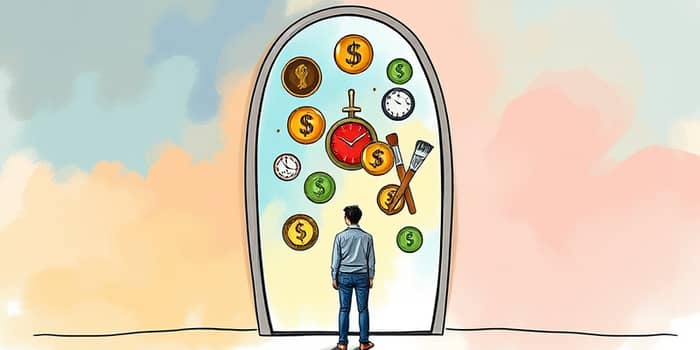
Money is more than just a tool for transactions; it is a profound reflection of our inner world, shaping and shaped by our deepest beliefs. Understanding your financial personality can unlock a path to greater self-awareness and empowerment. This journey begins with recognizing that your relationship with money is not fixed but fluid, influenced by unconscious patterns that drive your decisions.
By exploring your money archetype, you gain insight into behaviors that may have held you back. This awareness transforms fear into opportunity, allowing you to navigate financial challenges with clarity and confidence. It is a step toward aligning your actions with your true values, fostering a healthier, more intentional life.
In this article, we delve into the concept of money archetypes, offering a detailed guide to help you identify your dominant patterns. You will learn how to harness this knowledge for practical growth, turning potential weaknesses into strengths. Embrace this exploration as a catalyst for positive change in your financial and personal journey.
The Foundation of Money Archetypes
Money archetypes are unconscious behavioral patterns that define how we interact with wealth. They are not rigid personalities but dynamic influences that emerge in different contexts. All eight archetypes exist within each person, with one often dominating based on stress levels or life situations.
Research shows that people frequently revert to problematic archetypes during times of pressure, especially those learned from family. This understanding enables you to maximize positive behaviors while minimizing automatic, unhealthy reactions. By recognizing your archetype, you can break free from cycles that limit your financial potential.
The Eight Primary Money Archetypes
Each archetype has distinct traits that shape financial decisions. Here is an overview of the key types, starting with those most commonly observed.
The Innocent archetype avoids financial reality, often living in denial. They feel overwhelmed by money matters and rely heavily on others for guidance.
- Takes an ostrich approach to finances
- Easily overwhelmed by information
- Trusts others' opinions without question
- Everyone starts as an Innocent; growth comes from motivation
The Victim archetype focuses on past mistakes and blames external factors. They exhibit passive-aggressive behaviors and may disguise themselves as Innocents.
- Focuses on the past and external blame
- Passive-aggressive in nature
- Desires others to care for them financially
- Often appears powerless
The Creator/Artist archetype navigates a spiritual path but struggles with the material world. They have a conflicted relationship with money, loving it for freedom but rejecting materialism.
- On a spiritual or artistic journey
- Finds the material world difficult
- Experiences love/hate with money
- Blocks success through negative beliefs
The Tyrant archetype is the most fearful, with an unhealthy attachment to money from childhood. They overreact to financial downturns and seek control to mask insecurity.
- Most fearful of all archetypes
- Overreacts to market changes
- Exudes success but feels incomplete
- Relies on external validation
Other archetypes like the Warrior, Martyr, and Fool are referenced but less detailed, highlighting the diversity of financial personalities.
Alternative Frameworks for Financial Personalities
Beyond the primary eight, other models offer additional insights. These frameworks help you see money archetypes from different angles, enriching your understanding.
The five-archetype model includes types like the Giver, who finds meaning in generosity, and the Gatherer, who saves aggressively for the future. This model emphasizes varied financial values that can coexist in one person.
- The Giver: Generous with money and help
- The Gatherer: Saves aggressively, cautious about borrowing
- The Royal: Bases self-esteem on wealth displays
- The Rebel: Questions conventional wisdom
- The Dreamer: Minimal detail but represents visionary traits
The contemporary four-archetype framework features the Free Spirit, Doomsday Prepper, Money Admirer, and Blissfully Indifferent. Each has unique strengths and challenges, such as the Free Spirit's optimism versus overspending.
- Free Spirit: Enjoys spending, optimistic, but prone to overspending
- Doomsday Prepper: Future-focused, responsible, but anxious
- Money Admirer: Equates money with success, always seeking more
- Blissfully Indifferent: Overwhelmed by management, uses automation
The Psychological Roots of Your Money Archetype
Your financial personality is deeply rooted in childhood experiences and learned behaviors. Messages heard early in life shape your persona around success, often leading to fear-based relationships with money.
For example, the Mother Archetype views money as essential for security, making risk-averse decisions. This type experiences guilt over mistakes and gives money excessive power, highlighting how archetypes can limit growth.
Behavioral patterns are often inherited from families, affecting people across all socioeconomic levels. Understanding these origins is key to breaking cycles and fostering healthier financial habits.
Money as a Multi-Dimensional Archetype
Money functions in multiple archetypal aspects, including identity, power, technology, and emotion. This multi-dimensional nature explains why wealth creation can be challenging for many.
The emotional charge money carries can lead to unconscious behaviors, such as hoarding or overspending. In Western culture, money often symbolizes honor, assimilating qualities of the self and complicating financial decisions.
Psychological maturation involves seeing money as a reflection of internal development. Awareness enables balanced access to positive energies, reducing crises and shame associated with money.
Practical Application: Using Your Archetype for Growth
To apply this knowledge, start by identifying your dominant archetype through self-reflection. Consider how it manifests in daily decisions, from budgeting to investing. This step is crucial for actionable change, turning insights into improved financial well-being.
Use the table below to compare key archetypes and their growth opportunities. This visual aid can help you pinpoint areas for development and track progress over time.
Additionally, create a personal action plan based on your archetype. For instance, if you are a Gatherer, set aside funds for enjoyment to avoid excessive saving. Regular reviews of your financial habits can reinforce positive changes and prevent relapse into old patterns.
Conclusion: Embracing Financial Self-Awareness
Recognizing your money archetype is not about judgment but about empowerment. It offers a framework for understanding your financial personality and making conscious choices. This journey fosters a more productive relationship with yourself and your money, leading to greater fulfillment.
As you apply these insights, remember that archetypes can shift across life stages. Stay flexible and open to growth, using self-awareness as a guide. Your financial future is shaped by the steps you take today, so embrace this knowledge with courage and optimism.
References
- https://lifetimeparadigm.com/whats-your-money-archetype/
- https://www.allset2retire.com/blog-01/whats-your-money-archetype
- https://www.floridabankruptcynow.com/whats-your-money-archetype/
- https://www.mindmoneybalance.com/blogandvideos/4-financial-archetypes
- https://creativemindlife.com/podcast-episodes/what-is-your-wealth-archetype/
- https://www.youtube.com/watch?v=2GfPilJvibw
- https://www.womentalkingfinance.com.au/blog/what-drives-your-financial-behaviours-the-8-money-types-reveal-all
- https://appliedjung.com/money-complex/