How do you define wealth? Is it a single number in your bank account, or something more enduring and flexible?
Most people chase a linear path: get a high salary, save diligently, invest wisely, and retire comfortably.
This approach often misses the multi-strand, resilient financial system that truly safeguards your future.
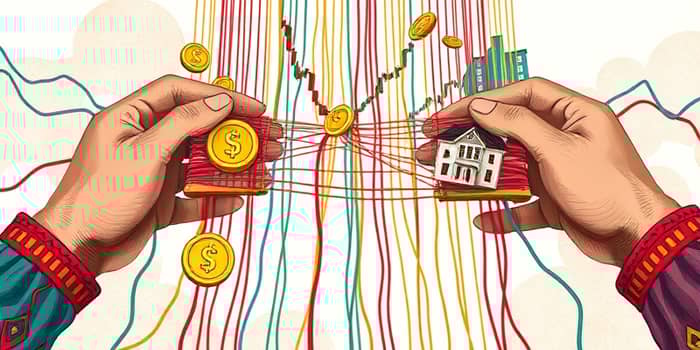
Wealth weaving reframes this journey as crafting a tapestry.
Imagine your finances as interwoven threads of income, assets, skills, and protection.
Each strand supports the others, creating strength that no single thread could achieve alone.
Conceptual Frame: Wealth as a Tapestry
Traditional wealth building focuses on accumulation in a straight line.
But life is unpredictable, with twists like market downturns, health issues, or career changes.
A woven approach integrates cash flow stability with growth and adaptability.
This mindset shift is crucial for long-term security.
Wealth is not just about money.
It includes options, time, health, family cohesion, and legacy.
By viewing it as a tapestry, you can design a system that evolves with your life.
- Multiple interconnected threads: income, assets, skills, relationships, insurance, tax strategy, estate plans.
- Strength from interlocking elements, not isolated efforts.
- Contrast with linear models that overlook risk and flexibility.
Foundations: The Loom of Your Financial Tapestry
Every tapestry needs a stable base to build upon.
In wealth weaving, this starts with cash flow as the base of your pyramid.
Consistently generating enough income to handle monthly expenses is non-negotiable.
Without this, other strategies may unravel under pressure.
Next, create an emergency buffer.
Aim for 2–6 months of living expenses in easily accessible savings.
This fund prevents high-interest debt during crises and provides psychological safety.
It allows you to take calculated risks without fear.
Budgeting ties this all together.
Wealthy households often use detailed budgets to track income, expenses, savings, and investments.
They avoid impulsive purchases and prioritize discipline.
A key habit is pay yourself first.
Treat savings and investment contributions as non-negotiable bills.
Automate these payments to build consistency.
- Generate stable income for monthly needs.
- Build an emergency fund of 2-6 months' expenses.
- Use budgets to track and control spending.
- Automate savings to ensure consistency.
Structural Pillars: The Vertical Threads
Think of your tapestry's main vertical threads as core assets that provide structure.
These include real property, financial assets, and legacy plans.
Real estate, especially a primary residence, is often the first pillar.
It generally appreciates over time and builds home equity.
This equity can become collateral for borrowing or a flexible resource.
It adds resilience by offering options like downsizing or borrowing in a crisis.
Financial assets are another critical thread.
Investing savings creates parallel income streams and grows wealth.
Align investments with goals and time horizons for maximum impact.
Regular investing into diversified portfolios is key to accumulation.
- Real property: home and investment real estate for appreciation and equity.
- Financial assets: stocks, bonds, and other investments for growth.
- Legacy: estate plans to pass on wealth effectively.
Time and Compounding: The Warp of Wealth
Time is the warp thread that holds your tapestry together.
Compounding amplifies small, consistent actions into significant results.
For example, contributing $500 monthly to a retirement account with a 7% average return can grow to over $1 million in 40 years.
This illustrates time × consistency × return in action.
Starting early has an outsized influence on outcomes.
It allows compounding to work its magic over decades.
Even modest habits, maintained over time, lead to substantial wealth.
Think of compounding as the silent weaver in the background.
It continuously adds strength to your financial fabric.
- Start investing early to leverage compounding.
- Make consistent contributions, no matter how small.
- Focus on long-term horizons for growth.
Diversification: Weaving Multiple Asset Classes
Diversification is like using different colored threads to create a vibrant pattern.
It spreads investments across asset classes to mitigate risk.
This avoids overexposure to one sector or asset.
It leads to smoother long-term growth and less volatility.
Consider a mix of stocks, bonds, real estate, and international equity.
Including assets like gold or debt funds can add balance.
Optimal allocation per wealth creation goal adjusts based on your needs.
This approach protects against market fluctuations.
It ensures that if one thread weakens, others hold strong.
- Stocks for growth potential.
- Bonds for stability and income.
- Real estate for appreciation and diversification.
- International assets to reduce geographic risk.
Tax-Aware Structuring: The Invisible Thread
Tax planning is an often-overlooked thread that can strengthen your tapestry.
Ultra-high-net-worth individuals focus on building their balance sheet, not just W-2 income.
They distinguish between heavily taxed wages and tax-advantaged asset growth.
For instance, using income to buy assets like rental properties can offer long-term appreciation and tax advantages.
This shifts focus from spending to strategic investment.
For most people, this means using tax-advantaged accounts like 401(k)s or IRAs.
Structure income toward capital gains and dividends where possible.
Take advantage of legal deductions and credits to reduce burdens.
By weaving in tax efficiency, you retain more wealth to reinvest.
Strategic Use of Debt: Leverage as a Tool
Debt can be a double-edged thread in your tapestry.
Wealthy individuals see leverage as a tool for amplification, not a burden.
For example, using a down payment to control a larger asset, like a rental property, increases potential returns.
This approach hedges against inflation by repaying fixed-rate debt with cheaper future dollars.
However, leverage magnifies losses in downturns.
It requires careful risk analysis and risk-adjusted returns consideration.
Avoid debt for personal consumption or lifestyle creep.
Reserve it for productive investments that generate income or appreciation.
This strategic use adds flexibility without compromising stability.
- Use debt for investments, not consumption.
- Analyze risks before leveraging.
- Focus on long-term, income-generating assets.
Risk Management: Strengthening the Fabric
Risk management weaves protection into every layer of your tapestry.
Pay attention to risk-adjusted returns, weighing gains against potential downsides.
An investment with lower volatility may be better per unit of risk.
Incorporate protection threads like insurance and emergency funds.
Health, disability, and liability coverage safeguard against unforeseen events.
Diversification itself is a form of risk mitigation.
By spreading assets, you reduce exposure to single points of failure.
Comprehensive financial plan including risk mitigation ensures durability.
This holistic approach prepares you for shocks without unraveling your progress.
Planning and Goal Alignment: Designing the Pattern
Your financial tapestry needs a clear design to guide its creation.
Set SMART goals: Specific, Measurable, Achievable, Relevant, and Time-bound.
Align every thread—income, savings, investments—with these objectives.
Regularly review and adjust your plan as life changes.
Wealth weaving is not static; it adapts to new circumstances.
Involve family in discussions to build cohesion and legacy.
This ensures that your tapestry reflects your values and aspirations.
By designing with intention, you create a pattern that endures.
Embrace the journey of continuous improvement and learning.
Start today by assessing your current threads and weaving in new ones.
Your resilient financial tapestry awaits its masterpiece.
References
- https://www.dominion.com/wealth-planning/5-strategies-the-wealthy-use-to-grow-their-fortunes
- https://handsonbanking.org/resources/wealth-building/
- https://knowledge.wharton.upenn.edu/article/eight-principles-of-strategic-wealth-management/
- https://fa.wellsfargoadvisors.com/woven-wealth-management-group/
- https://www.amerantbank.com/ofinterest/adopting-wealthy-financial-habits/
- https://www.etmoney.com/learn/personal-finance/what-is-wealth-creation-meaning-importance-and-strategies/
- https://smartasset.com/investing/wealth-accumulation
- https://holbornassets.com/blog/8-must-know-strategies-for-effective-wealth-management/
- https://www.jpmorgan.com/insights/wealth-planning/aligning-your-strategy-with-your-goals