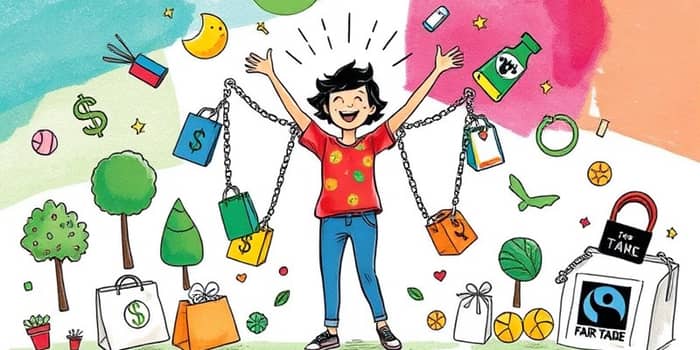
In a world dominated by fast fashion, instant gratification, and endless advertising, many of us find ourselves trapped in cycles of mindless spending that drain our wallets and our well-being.
Conscious consumption offers a powerful escape, transforming how we interact with the market and ourselves.
This deliberate approach prioritizes long-term value and personal fulfillment over impulsive buys, inviting you to rethink every purchase as a vote for the world you want to live in.
By embracing this mindset, you not only free yourself from financial burdens but also contribute to a healthier planet and more equitable society.
It's a journey from being a passive consumer to an active, mindful participant in the economy.
What Is Conscious Consumption?
At its core, conscious consumption is about making deliberate choices that align with your values and impact.
It involves thinking before you buy and shifting away from the linear take-make-dispose model that dominates modern consumerism.
This practice, also known as ethical or green consumerism, emphasizes quality, durability, and social responsibility in every transaction.
By adopting this approach, you move towards a circular economy where resources are reused and waste is minimized.
It's not about deprivation but about enriching your life through intentionality.
The Personal and Financial Rewards
One of the most immediate benefits of conscious consumption is the positive effect on your personal finances and well-being.
Saving money becomes a natural outcome as you reduce unnecessary spending and avoid debt from impulsive purchases.
This financial freedom allows you to redirect resources toward savings, investments, or meaningful experiences that bring lasting joy.
Beyond the monetary aspects, it boosts your overall well-being by aligning your actions with your core values.
You'll feel a greater sense of purpose and fulfillment, reducing the regret and clutter that often accompany thoughtless buying.
To start reaping these rewards, consider these key personal benefits:
- Less waste through choosing durable and repairable items.
- Greater satisfaction from purchases that reflect your ethics.
- Enhanced mental clarity by avoiding consumerist pressures.
These changes create a ripple effect, improving your daily life in tangible ways.
Environmental and Social Impact
Conscious consumption extends far beyond personal gain, offering significant benefits for the environment and society.
By reducing waste and resource strain, you help lower landfill contributions and mitigate climate change through decreased emissions.
Promoting a circular economy is central to this, encouraging practices like recycling and reusing instead of disposal.
On the social front, it supports ethical labor practices and fair trade, empowering marginalized communities and fostering economic equity.
Your choices can demand transparency from brands, pushing for safer working conditions and more responsible supply chains.
Here are some environmental and social advantages to keep in mind:
- Reduced pollution from minimal packaging and sustainable materials.
- Stronger local economies by supporting small businesses and artisans.
- Increased awareness of global issues through informed purchasing.
These impacts demonstrate how individual actions can drive collective change.
Key Statistics That Will Surprise You
Recent data highlights the growing momentum behind conscious consumption, showing it's more than just a trend.
For instance, demand for sustainable products grew over seven times faster than non-sustainable ones in 2022.
Nearly 70% of consumers are willing to pay a premium of 35% or more for ethical items, according to a 2023 survey.
Recognition of Fair Trade in the U.S. rose from 38% in 2012 to 66% in 2021, indicating a shift in public awareness.
These statistics reveal a market increasingly driven by values, not just prices.
To visualize the contrast between old and new habits, consider this comparison:
This table underscores the transformative potential of mindful choices.
Historical Roots and Modern Relevance
The concept of conscious consumption has evolved since the 1970s, gaining traction with rising environmental awareness.
Catalysts like the climate crisis and social media have amplified calls for ethical practices, making it a mainstream movement today.
It represents a paradigm shift from growth-oriented economics to priorities focused on ecological and social health.
Businesses are now adapting to meet this demand, offering more affordable and sustainable options to attract conscious consumers.
This historical context shows that it's a resilient and evolving approach to global challenges.
Practical Steps to Transform Your Buying Habits
Embracing conscious consumption doesn't require drastic changes overnight; start with small, manageable steps.
First, consume less by questioning whether you truly need an item or if it's just an impulse driven by trends.
Opt for quality over quantity, choosing durable products that can be repaired or reused, such as metal straws or organic cotton clothing.
Research brands thoroughly, looking for certifications like Fair Trade and transparent supply chains to ensure ethical sourcing.
Support circularity by buying recycled goods and utilizing take-back or repair services whenever possible.
Here are actionable strategies to integrate into your daily life:
- Shop secondhand or borrow items to reduce new purchases.
- Prioritize local and small businesses to strengthen community ties.
- Develop media literacy to resist manipulative advertising.
- Align purchases with intrinsic values like environmentalism.
- Build habits of critical consumption through regular reflection.
These tips empower you to make consistent, positive changes.
Identifying and Overcoming Spending Traps
To unlock your spending traps, it's crucial to recognize and avoid common pitfalls that lead to mindless consumption.
Impulsive buying is a major trap, often driven by ads or social trends, resulting in regret and financial strain.
Another trap is prioritizing quantity over quality, which fuels waste and environmental harm through mass consumption.
Supporting unethical brands due to unexamined habits can misalign your spending with your values, undermining personal integrity.
The linear mindset of take-make-dispose ignores broader impacts, trapping you in a cycle of disposal and repurchase.
To counter these, focus on deliberate decisions and value alignment for greater financial freedom.
Consider these specific traps to watch out for:
- Falling for limited-time offers that create false urgency.
- Ignoring the lifecycle of products, from production to disposal.
- Succumbing to peer pressure or keeping up with trends.
- Overlooking the social and environmental costs of cheap goods.
- Failing to budget for sustainable alternatives due to perceived higher costs.
By acknowledging these traps, you can develop strategies to avoid them.
The Bigger Picture: Systemic Change
Conscious consumption isn't just about individual actions; it's a catalyst for broader systemic change across economies and cultures.
As consumers demand more ethical practices, businesses are compelled to innovate towards sustainability, shifting market dynamics.
This drives a cultural move towards post-growth models that prioritize well-being over mere economic growth, as highlighted in academic perspectives.
Your choices, combined with policy nudges and education, can foster resilience and equity on a global scale.
Ultimately, it's about re-evaluating priorities for a richer, more connected world where every purchase matters.
References
- https://climate.sustainability-directory.com/question/what-are-the-benefits-of-conscious-consumption/
- https://bschool.pepperdine.edu/personal-growth/article/conscious-consumerism.htm
- https://www.haskell.com/insights/conscious-consumerism/
- https://www.cleanhub.com/blog/conscious-consumerism
- https://slowlivingldn.com/journal/live-consciously/conscious-consumerism/
- https://www.u2y.io/en/blog/consumatore-consapevole-ecco-come-riconoscerlo-up2you
- https://www.juliusbaer.com/en/insights/wealth-insights/wealth-report/the-conscious-consumer/