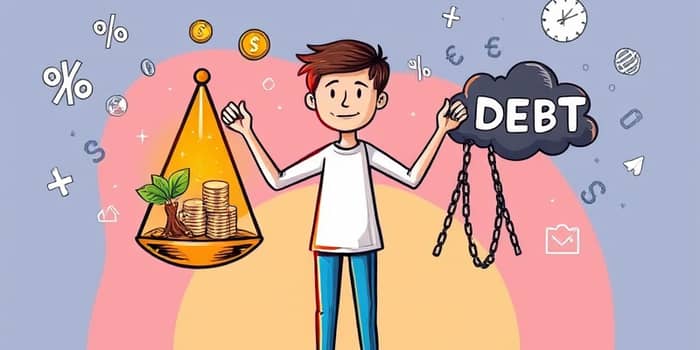
Interest rates are the silent architects of our financial realities, shaping everything from our daily purchases to our long-term dreams.
Whether they act as a trusted ally or a hidden adversary depends largely on how we engage with them.
This article will guide you through the intricate world of interest rates, offering practical insights to harness their power and protect your wealth.
The Dual Nature of Interest Rates
At its core, an interest rate is the cost of borrowing or the reward for saving, expressed as a percentage.
For borrowers, it represents what you pay on loans like mortgages and credit cards.
For savers and investors, it's what you earn on deposits and bonds, making it a critical component of financial growth.
The federal funds rate set by central banks serves as a benchmark, influencing rates across the economy.
When rates rise, borrowing becomes more expensive, but saving yields improve.
Conversely, lower rates make loans cheaper but reduce returns on savings.
Understanding this balance is key to navigating personal finance effectively.
- Interest as a friend: It boosts savings through compound growth and helps control inflation.
- Interest as a foe: It increases debt burdens and limits cash flow for borrowers.
Decoding the Types: Simple vs. Compound
Interest rates come in various forms, each with unique calculations and impacts.
Simple interest is calculated only on the principal amount, making it straightforward but less powerful over time.
For example, borrowing $1,000 at 5% simple interest for three years yields $150 in total interest.
Compound interest, on the other hand, is interest on interest, where earnings accumulate on both principal and accrued interest.
This effect can significantly amplify savings or debts, especially with frequent compounding.
The effective interest rate accounts for compounding, showing the true annual cost or return.
Real interest rates adjust for inflation, revealing the actual purchasing power growth.
- Fixed rates: Remain constant, offering predictability but potentially higher initial costs.
- Variable rates: Change with market benchmarks, providing flexibility but added risk.
- APR vs. APY: APR includes fees for loans, while APY reflects compounded returns for savings.
Who Pulls the Strings: Central Banks and Market Forces
Central banks, like the Federal Reserve, play a pivotal role in setting interest rates to manage economic stability.
By adjusting the federal funds rate, they influence borrowing and saving rates across mortgages, auto loans, and more.
When the Fed raises rates, it aims to combat inflation and cool an overheated economy.
This leads to higher loan costs but better returns on savings accounts and CDs.
For instance, a $500,000 mortgage at 6.28% costs about $3,088 monthly, a 48% increase from a 2.93% rate.
When rates are cut, borrowing becomes cheaper, stimulating spending and investment.
However, savers face lower yields, making it a mixed scenario.
- Effects of rate hikes: Higher credit card APRs, reduced home affordability, and improved savings yields.
- Effects of rate cuts: Opportunities for refinancing, lower new-loan rates, and diminished cash returns.
Borrowing in a High-Rate Environment
For borrowers, interest rates can quickly become a foe if not managed wisely.
Higher rates increase monthly payments on mortgages, auto loans, and credit cards.
This can shrink purchasing power and make it harder to pay down debt principal.
Adjustable-rate mortgages and variable student loans pose particular risks as payments may rise unexpectedly.
Credit card balances accumulate interest rapidly, trapping users in cycles of debt if not addressed.
To mitigate this, consider locking in fixed rates during low periods or refinancing when rates drop.
Prioritizing high-interest debt repayment is crucial to avoid long-term financial strain.
- Mortgages: Higher rates reduce loan qualifications and cool housing markets.
- Auto loans: Increased costs may delay purchases or push buyers to cheaper options.
- Credit cards: Variable APRs spike with Fed actions, making balances costlier.
Saving and Investing: Maximizing Returns
For savers and investors, interest rates offer a pathway to wealth when leveraged correctly.
High-yield savings accounts and CDs provide better returns in rising rate environments.
Bonds and fixed-income assets see higher yields on new issues, though existing bond prices may fall.
Money market funds track short-term rates, offering improved liquidity and returns.
Compound interest is a powerful friend for long-term goals like retirement, where small, consistent investments grow exponentially.
Diversifying across assets can hedge against rate fluctuations and market volatility.
Monitoring real interest rates ensures your money maintains purchasing power over time.
- Savings strategies: Use high-yield accounts for emergency funds and short-term goals.
- Investment tips: Consider bonds for stability and stocks for growth in low-rate periods.
- Risk management: Balance portfolios to adapt to changing economic conditions.
Practical Strategies to Turn the Tide
Transforming interest rates from foe to friend requires proactive financial habits.
Start by assessing your debt profile and prioritizing repayments on high-interest loans.
Build an emergency fund in high-yield accounts to earn competitive returns while staying liquid.
For long-term savings, embrace compound interest through regular contributions to retirement accounts.
Stay informed about central bank policies to anticipate rate changes and adjust strategies accordingly.
Consider consulting financial advisors for personalized plans that align with your goals.
Remember, small adjustments today can lead to significant financial freedom tomorrow.
- Debt management: Consolidate loans or seek lower rates through refinancing.
- Saving habits: Automate deposits to savings accounts to capitalize on compounding.
- Investment diversification: Spread assets across stocks, bonds, and cash equivalents.
Interest rates are not inherently good or bad; they are tools that reflect economic dynamics.
By understanding their mechanisms and impacts, you can make informed decisions that enhance your financial well-being.
Whether saving for a rainy day or investing for the future, let interest rates work for you, not against you.
Embrace this knowledge to build a resilient and prosperous financial life.
References
- https://us.plus500.com/markets/interestrates/what-are-interest-rates~1
- https://elevate-wealth.com/higher-interest-rates-affect-personal-finances/
- https://corporatefinanceinstitute.com/resources/commercial-lending/types-of-interest/
- https://www.bankrate.com/banking/federal-reserve/how-federal-reserve-impacts-your-money/
- https://www.sofi.com/learn/content/interest-rate-definition/
- https://www.mchenrybank.com/articles/2022/09/fed-interest-rate-changes-how-does-this-impact-your-personal-finances.html
- https://smartasset.com/investing/understanding-the-7-types-of-interest-rate
- https://www.fultonbank.com/Education-Center/Saving-and-Budgeting/4-ways-higher-interest-rates-impact-your-finances
- https://www.equifax.com/personal/education/personal-finance/articles/-/learn/what-do-interest-rates-mean/
- https://www.fnbo.com/insights/personal-finance/2025/how-fed-rate-cuts-could-impact-your-personal-finances
- https://www.treasurydirect.gov/marketable-securities/understanding-pricing/
- https://www.vermontfederal.org/blog/how-fed-interest-rate-impacts-you
- https://www.khanacademy.org/college-careers-more/financial-literacy/xa6995ea67a8e9fdd:loans-and-debt/xa6995ea67a8e9fdd:terms-of-borrowing/a/types-of-interest-rates
- https://www.usbank.com/financialiq/invest-your-money/investment-strategies/how-do-interest-rates-affect-investments.html
- https://www.discover.com/online-banking/banking-topics/how-does-the-federal-reserve-interest-rate-affect-me/