Have you ever been tempted by a $5 t-shirt, only to find it unraveling after a few washes? The illusion of affordability in fast fashion often masks a deeper, more expensive reality. This article explores how low upfront prices can lead to high long-term costs.
Fast fashion dominates our closets, but its true impact extends beyond price tags. By examining spending habits, we uncover hidden financial and ethical burdens. It is time to rethink what cheap really means.
The key lies in understanding value over time. Sustainable fashion offers enduring quality that outperforms disposable trends. Let us delve into the numbers and narratives behind your wardrobe choices.
The Booming Fast Fashion Market
The fast fashion industry is expanding rapidly. Valued at around $91 billion in 2021, it is projected to reach $163.8 billion by 2025. This growth reflects a global appetite for quick, inexpensive clothing.
Market forecasts vary, but the trend is clear. Some sources predict a valuation of $133.43 billion by 2026 with an 8.8% CAGR. Others estimate $180.6 billion by 2026, growing to $446.9 billion by 2035. This surge highlights consumer demand for rapid trends.
In contrast, the broader apparel market is set to hit $2.25 trillion by 2026. Fast fashion remains a leading segment, driven by constant new collections. Companies like Zara release about 24 collections yearly, far above the industry average.
Upfront Price Comparisons
At first glance, fast fashion seems unbeatable. A complete outfit can cost under $50, while sustainable alternatives range from $200 to $400. This disparity often sways buying decisions.
Individual item prices reveal more nuance. The table below breaks down common clothing costs, showing why sustainable options appear pricier.
Markup differences also play a role. Fast fashion items often have a 400-600% markup, compared to 200-300% for sustainable brands. This reflects lower production costs but higher turnover.
Cost Per Wear: The True Value Metric
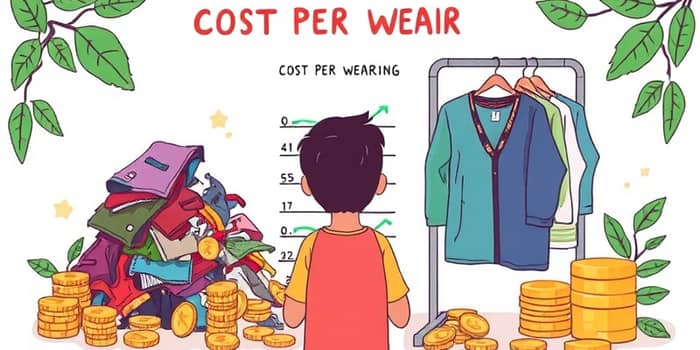
To assess real spending, consider cost per wear. This metric divides purchase price by the number of wears. It transforms how we view clothing investments.
Real-world examples illustrate this perfectly. A $15 fast fashion sweater worn eight times costs $1.87 per wear. In contrast, a $120 sustainable sweater worn 100 times costs $1.20 per wear. Over time, quality pieces can drop to $0.50-1.00 per wear.
Durability is a critical factor. Fast fashion garments typically last 5-10 wears before showing wear. Sustainable pieces withstand 50-200+ wears, maintaining their appearance. This longevity reduces the need for frequent replacements.
- Fast fashion lifespan: 6 months to 1 year
- Sustainable fashion lifespan: 2-5 years
- Replacement factor: 3-5 fast fashion items for one sustainable garment
Why Sustainable Fashion Costs More
Higher prices in sustainable fashion stem from ethical and environmental commitments. These practices ensure better quality and fairness but increase production costs.
Key reasons include ethical labor practices. Fast fashion often exploits cheap labor in unregulated environments. Sustainable brands pay fair wages and provide humane working conditions. This investment in people adds to overhead.
Eco-friendly materials are another factor. Fabrics like organic cotton or recycled polyester cost more than conventional ones. They adhere to stricter environmental standards during cultivation and processing.
- Fair trade certifications ensure transparency
- Traceable supply chains verify ethical sourcing
- Innovations in recycling drive future cost reductions
Additionally, sustainable fashion embraces slow production cycles. This reduces waste but requires more time and resources. The focus is on durability rather than rapid turnover.
Environmental Impact of Fast Fashion
The environmental toll of fast fashion is staggering. It contributes significantly to global carbon emissions and resource depletion. Understanding this impact is crucial for informed spending.
Fast fashion accounts for 10% of global carbon emissions. Annually, it generates 1.2 billion tons of greenhouse gases. Water usage is equally concerning, with enough consumed yearly to meet the needs of 5 million people.
Other environmental costs include pollution from dyes and waste. The industry's rapid production cycles exacerbate these issues. Carbon footprint reduction is a key benefit of sustainable alternatives.
- High greenhouse gas emissions from manufacturing
- Excessive water consumption in cotton farming
- Textile waste clogging landfills
Consumer Behavior and Market Trends
Modern shopping habits fuel the fast fashion cycle. Consumers buy more clothes but keep them for shorter periods. This behavior drives industry growth and environmental harm.
Since 2000, clothing purchases have increased by 60%, while garment lifespan has halved. The average person spends about $683.70 annually on clothes. This reflects a culture of disposable fashion.
Market trends show fast fashion production doubling between 2000 and 2014. In regions like the UK, it makes up over 10% of retail sales. China leads as the largest producer and exporter. Rapid style turnover encourages constant buying.
- Increased purchase frequency per consumer
- Shorter garment retention times
- Growth in online fast fashion sales
The Rise of Sustainable and Resale Markets
In response to fast fashion's drawbacks, alternatives are growing. The resale market and sustainable fashion industry offer promising solutions. These trends indicate a shift toward more responsible consumption.
The global resale clothing market is expected to double from $36 billion in 2021 to $77 billion by 2025. This growth is partly driven by environmental awareness. Consumers seek value and sustainability in second-hand options.
Sustainable fashion is also expanding. Currently worth over $6.5 billion, it is projected to reach $10.1 billion by 2025. By 2030, further growth is anticipated. This market embraces eco-conscious production methods.
- Resale platforms gaining popularity
- Sustainable brands innovating with materials
- Consumer demand for transparency increasing
Long-Term Financial Impact
Investing in sustainable fashion pays off over time. While initial costs are higher, savings accumulate through reduced replacements. A five-year comparison highlights this advantage.
An eco-friendly wardrobe under $500 can save over $800 compared to fast fashion. This is due to fewer purchases and longer garment life. The financial wisdom extends beyond mere spending.
Consider the cumulative effect of cost per wear. By choosing durable items, you minimize waste and maximize value. This approach aligns with both budget-conscious and ethical goals.
To apply this, calculate your own cost per wear. Track how often you wear items and their condition. This simple practice can revolutionize your shopping habits.
- Calculate purchase price divided by wears
- Prioritize items with lower long-term cost
- Build a capsule wardrobe for versatility
Empowering Your Spending Decisions
Understanding the true cost of fast fashion empowers you to make better choices. Look beyond price tags to consider durability, ethics, and environment. Your wardrobe can reflect values, not just trends.
Start by auditing your current clothes. Identify pieces that last and those that don't. Invest in quality basics that offer multiple wears. Sustainable fashion is an investment in your future and the planet's.
Embrace slow fashion principles. Buy less, choose well, and make it last. This mindset reduces clutter and promotes mindful consumption. Together, we can shift the industry toward greater responsibility.
Remember, every purchase is a vote for the world you want. Choose garments that tell a story of care and longevity. The true cost is not just in dollars, but in impact.
References
- https://market.us/statistics/consumer-goods/fast-fashion/
- https://www.bitsandbangles.com/blogs/news/fast-fashion-vs-sustainable-style-the-real-cost-breakdown
- https://rawshot.ai/statistic/fast-fashion-growth
- https://www.mycoworks.com/blog/true-cost-of-sustainable-fashion-fast-fashion-carbon-footprint
- https://www.researchnester.com/reports/fast-fashion-market/8200
- https://www.limcollege.edu/blog/can-sustainable-fashion-be-affordable
- https://www.globalgrowthinsights.com/market-reports/fast-fashion-market-104270
- https://www.newenglandwoolens.com/blogs/articles/slow-fashion-cost-vs-value
- https://www.mckinsey.com/industries/retail/our-insights/state-of-fashion
- https://www.projectcece.com/blog/580/what-is-cost-per-wear-in-fast-fashion-and-slow-fashion/
- https://fashionunited.com/statistics/global-fashion-industry-statistics
- https://pomp.store/blogs/journal/fast-fashion-vs-sustainable-fashion-real-cost-benefits-of-sustainable-clothing
- https://theroundup.org/sustainable-fashion-statistics/
- https://www.charlesandcolvard.com/blog/the-true-cost-of-fast-fashion-and-the-sustainable-alternative/
- https://heuritech.com/articles/fashion-industry-challenges/
- https://sybariticboutique.com/blogs/news/can-sustainable-fashion-actually-fit-your-budget-heres-what-building-an-eco-friendly-wardrobe-really-costs