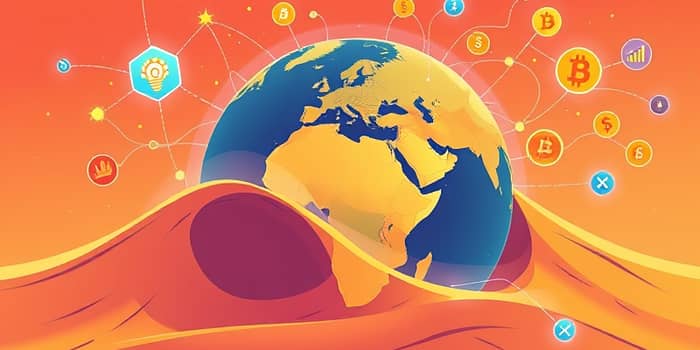
The landscape of global finance is transforming at an unprecedented pace, where familiar stability is giving way to dynamic and often unpredictable forces. The deepening interdependence between trade and finance means that economic shocks can ripple across borders faster than ever, challenging traditional models and demanding new strategies for resilience.
As we look to 2025, slowing economic growth and technological upheavals present both daunting challenges and remarkable opportunities for individuals, businesses, and policymakers alike. AI-driven disruptions are reshaping every facet of financial services, from banking operations to investment decisions, creating a need for proactive adaptation.
This article delves into the core shifts in global finance, offering practical insights and inspiring guidance to help you navigate these changes effectively. Embracing digital transformation and innovation can unlock new potentials, turning potential threats into avenues for growth and stability in an evolving world.
The Global Economic Slowdown: A New Reality
Economic projections indicate a significant deceleration, with global growth expected to drop from 2.9% in 2024 to 2.6% in 2025 and 2026. This pace falls well below the pre-pandemic average of 3% and is far from the 4.4% seen before the 2008 financial crisis.
Key economies like the US and China are experiencing their own slowdowns, with US growth forecasted at 1.8% in 2025 and China's declining from 5% to 4.6% by 2026. These trends reflect broader structural shifts, including trade tensions and demographic changes.
The link between trade and finance has deepened dramatically, with over 90% of world trade relying on trade finance instruments such as credit lines and derivatives. Finance now drives trade as strongly as real economic activity, highlighting a fundamental shift in how value is created and exchanged globally.
For instance, more than 75% of income for major food-trading companies comes from financial operations like agricultural derivatives, rather than from physical goods. This underscores how financial markets are increasingly influencing real-world economic outcomes.
- Closely monitor economic indicators to anticipate shifts in trade and investment flows.
- Diversify supply chains and financial exposures to mitigate risks from volatility.
- Engage in strategic planning that accounts for the intertwined nature of trade and finance.
Banking at a Crossroads: Profits and Perils
The banking sector has seen remarkable growth, with funds intermediated by global banking increasing by $122 trillion from 2019 to 2024, outpacing GDP growth at 7.0% annually versus 4.8%. This expansion highlights the sector's critical role in the global economy.
Revenues after risk costs reached $5.5 trillion in 2024, and net income hit $1.2 trillion, the highest for any industry. However, this success is tempered by a significant valuation disconnect that raises questions about sustainability.
Price-to-book ratios stand at 1, which is 67-70% below other industries, and return on equity barely meets the cost of capital despite favorable conditions. This skepticism from investors suggests underlying concerns about future profitability and relevance in a changing landscape.
Looking ahead, banks face mounting pressures from declining interest rates, AI disruption, and intensifying competition from fintech and private credit firms. In a central scenario, AI could cut costs by 15-20% net but erode profits through agentic AI applications.
For example, a 5-10% shift in checking deposits could reduce deposit profits by 20%, potentially cutting global profit pools by $170 billion over a decade. Consumer deposits totaling $70 trillion, with $23 trillion in near-zero rate accounts, are particularly vulnerable to such changes.
- Adopt AI technologies to enhance operational efficiency and improve customer experience.
- Explore new revenue streams through digital services and partnerships with fintech innovators.
- Prepare for regulatory shifts that may redefine the banking industry's role and responsibilities.
The Rise of Nonbanks and Financial Stability
Nonbank financial institutions are gaining prominence, contributing to elevated financial stability risks through stretched asset valuations and sovereign bond pressures. Their growing influence challenges traditional banking models and requires enhanced monitoring.
Emerging markets face specific vulnerabilities, such as currency mismatches and dealer concentration in FX markets, which can spill over to other assets. These factors can amplify systemic risks, making financial systems more fragile in times of stress.
Enhanced monitoring is recommended for wholesale funding and exposures to nonbanks to mitigate these risks. The increasing role of NBFIs underscores a shift towards a more diverse and complex financial ecosystem.
For developing economies, local currency bond issuance has aided resilience, but risks from heavy borrowing and narrow investor bases persist. Weak policies can exacerbate these challenges, hindering long-term growth.
- Stay informed about nonbank activities and their potential impact on financial markets.
- Support regulatory efforts to improve transparency and risk management in NBFIs.
- Diversify investments to reduce exposure to concentrated risks in emerging markets.
Bridging the Gap: Challenges for Developing Economies
Developing countries account for over 40% of global output and merchandise trade, yet they hold only 25% of financial market value. This disparity highlights significant gaps in financial inclusion and access to capital.
They incur higher costs, with government bond yields at 6-12% compared to 1-4% in advanced economies. Smaller and less liquid markets hinder firm funding, stifling economic development and exacerbating inequalities.
Currency swings can raise import and debt costs, while shifts in risk appetite cut credit availability, making these economies more vulnerable to financial volatility. Uneven competition arises when prices follow financial trends over fundamentals.
Addressing these issues is crucial for global equity, requiring coordinated efforts to improve market infrastructure and policy frameworks. Practical steps can help bridge this gap and foster more inclusive growth.
- Advocate for reforms that lower borrowing costs and improve market liquidity in developing regions.
- Invest in financial literacy programs and infrastructure to enhance access to services.
- Promote international agreements that support stable capital flows and reduce volatility.
Technological Tides: AI and Digital Transformation
AI is poised for a breakout in the next 3-5 years, reshaping financial operations and consumer behavior through applications like agentic AI for auto-optimizing deposits and credit. This technological wave offers both efficiency gains and new challenges.
Digital inclusion is on the rise, with initiatives to close gender gaps in account ownership and improve access to financial services. The Global Findex database tracks progress in savings, borrowing, and overall financial health, guiding effective policy interventions.
Consumer and business shifts include rethinking loyalty, adapting to volatility, and embracing digital disruption, as revealed by insights from over 200,000 consumers and 60,000 businesses. These trends demand flexibility and innovation from all stakeholders.
The finance function is evolving rapidly, with AI adoption accelerating post-COVID, remote work becoming commonplace, and M&A activities surging. Cash reserves exceeding $2 trillion in S&P 500 companies highlight the need for strategic financial management.
- Leverage AI tools for better financial planning, risk assessment, and customer engagement.
- Embrace digital platforms for banking and payments to stay competitive in a fast-changing market.
- Participate in lifelong learning to keep up with technological advancements and apply them effectively.
Charting a Course: Reforms and Strategic Actions
Proposed reforms include fixing the multilateral trade dispute system, closing data gaps in trade and investment, and reforming the monetary system for stable currencies and capital flows. These actions can enhance global financial resilience.
For banks, precision approaches leveraging AI and focusing on consumer needs can drive the next growth curve. Preparing for macro and tech scenarios is essential for long-term success in a volatile environment.
Broader strategies involve fostering economic competitiveness while adhering to global standards, balancing innovation with stability. Regulatory debates must evolve to address new players and risks, redefining the role of traditional institutions.
UNCTAD recommendations emphasize strengthening regional and domestic capital markets, improving commodity trading transparency, and providing affordable trade finance for SMEs. Implementing these can reduce vulnerabilities and promote sustainable growth.
- Support policy initiatives that promote fair trade, financial stability, and inclusive development.
- Implement AI-driven strategies to optimize operations, enhance customer experiences, and mitigate risks.
- Engage in cross-sector collaborations to address emerging challenges and seize opportunities in finance.
In conclusion, the shifting sands of global finance call for a proactive, informed, and adaptive approach. By understanding these dynamics and taking strategic actions, we can build a more resilient, inclusive, and innovative financial future that benefits all stakeholders in this transformative era.
References
- https://unctad.org/news/over-90-global-trade-now-depends-finance-reshaping-opportunities-and-deepening-vulnerabilities
- https://www.mckinsey.com/industries/financial-services/our-insights/global-banking-annual-review
- https://www.imf.org/en/publications/gfsr/issues/2025/10/14/global-financial-stability-report-october-2025
- https://www.bcg.com/publications/2025/the-future-of-finance-fit-for-growth-built-for-purpose
- https://rfi.global/trends-and-predictions-2025-mid-year-review/
- https://www.deloitte.com/global/en/services/consulting-financial/perspectives/future-finance-trends-2025.html
- https://www.worldbank.org/en/publication/globalfindex
- https://www.protiviti.com/us-en/survey/global-finance-trends-survey
- https://planful.com/resources/reports/next-era-of-finance-2025-global-finance-survey/