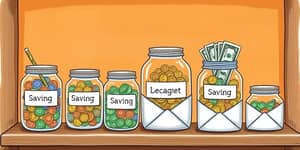
Every choice we make, from the mundane to the monumental, carries a hidden price tag that shapes our lives in profound ways.
This unseen cost, known as opportunity cost, is the value of the best forgone alternative when we select one option over another.
By understanding and applying this concept, we can transform our decision-making, leading to wiser, more fulfilling outcomes in both business and personal realms.
At its heart, opportunity cost stems from the universal truth of scarcity—we have limited resources like time, money, and energy, forcing us to prioritize.
It reminds us that saying yes to one path inherently means saying no to others, whether in finances, career, or relationships.
Understanding the Core Definition and Economic Foundations
Opportunity cost is not just a dry economic term; it is a lens through which we view our choices, encompassing both explicit monetary costs and implicit non-monetary ones.
Introduced by thinkers like Friedrich von Wieser, it emphasizes that value is derived from utility and trade-offs, not just supply and demand.
This principle applies universally: to individuals weighing daily decisions, businesses strategizing for growth, and even entire economies allocating resources.
It only becomes zero when no alternatives exist or resources are unlimited, which is rare in our constrained world.
Grasping this foundation empowers us to see beyond immediate gains, fostering a mindset of strategic thinking.
- Explicit costs include direct financial outlays, such as money spent on investments or purchases.
- Implicit costs involve intangible factors like time, pleasure, or personal satisfaction that are often overlooked but equally vital.
Key Formulas for Calculating Opportunity Cost
To make opportunity cost actionable, we can use simple formulas that bring clarity to complex decisions.
The basic formula is: Opportunity Cost = Return of Next Best Alternative - Return of Chosen Option.
A more detailed version accounts for resources invested: (Return of Chosen Option - Return of Next Best Alternative) ÷ Resources Invested.
Applying these formulas involves a step-by-step process that ensures thorough analysis.
- First, identify the decision and all viable alternatives, considering both short-term and long-term horizons.
- Next, determine the returns for each option, which can be financial gains, time savings, or strategic benefits.
- Then, assess the resources involved, including tangible assets like money and intangible ones like effort.
- After applying the formula, interpret the result: a positive value indicates the chosen option is better, while negative suggests the alternative is superior.
- Related tools like marginal analysis and Net Present Value (NPV) can complement this by evaluating incremental costs or discounting future cash flows.
Here is a practical table illustrating how these calculations work in real-world scenarios:
This table shows that opportunity cost is quantifiable, helping us move from gut feelings to data-driven choices.
Business and Production Examples in Action
In the business world, opportunity cost is a critical tool for optimizing growth and efficiency.
Companies constantly face trade-offs, such as allocating budget between marketing campaigns and employee training programs.
Choosing marketing might yield a quick 10% market share boost, while training offers long-term productivity gains that are harder to measure but equally valuable.
Other common scenarios include decisions on product lines, equipment upgrades, or market expansion.
- For instance, a bakery choosing pastries over cakes might attract new customers but risk alienating a loyal base.
- In manufacturing, opting for a new $45K factory over expanding an existing one for $37K involves weighing upfront costs against lost production.
- Hiring decisions, like investing in a seminar and raise versus bringing on a part-time employee, require balancing immediate financial outlay with future benefits.
These examples highlight that every business decision has hidden costs, and ignoring them can lead to suboptimal outcomes and stifled growth.
Personal and Life Examples for Everyday Wisdom
Opportunity cost is not confined to boardrooms; it permeates our daily lives, influencing everything from leisure activities to major life milestones.
When you choose to watch a movie, you forgo the pleasure of reading a book or spending time with loved ones.
Similarly, educational and career paths involve significant trade-offs, such as pursuing a Master's degree and sacrificing two years of potential salary.
Iconic cases like Bill Gates dropping out of Harvard to start Microsoft demonstrate how high-risk choices can yield immense rewards, but at the cost of stability and traditional success.
- Family finances often pit options like buying a larger house against saving for a child's college fund, where compounding interest adds another layer of cost.
- Investment decisions, such as choosing stable stocks over volatile high-return ones, revolve around risk tolerance and forgone gains.
- Even outsourcing chores involves weighing financial savings against the personal satisfaction of doing things yourself.
By recognizing these personal trade-offs, we can align our choices with deeper values and long-term happiness.
Practical Decision-Making Frameworks
To harness opportunity cost effectively, adopt structured frameworks that guide you through complex choices.
Start by listing all viable alternatives and estimating their returns, considering both monetary and strategic aspects.
Factor in timelines and align decisions with overarching goals, such as business objectives or personal aspirations.
Use scenario modeling and probabilities to calculate expected values, moving beyond guesswork to informed analysis.
Remember to ignore sunk costs—past expenses that are irrelevant to future decisions—as they can cloud judgment.
- First, brainstorm options without bias, ensuring you don't overlook creative alternatives.
- Second, quantify returns where possible, but also account for qualitative factors like happiness or brand reputation.
- Third, apply tools like NPV or sensitivity analysis to test assumptions under different conditions.
- Fourth, compare results against long-term objectives to ensure consistency with your vision.
- Finally, review decisions periodically, as opportunity costs can change with new information or shifting priorities.
This systematic approach enhances decision-making wisdom, reducing regret and maximizing resource use.
Broader Implications for a Wiser Life
Embracing opportunity cost refutes the myth of "having it all" and centers us on the reality of trade-offs in resource allocation.
It forces us to assess relative value, whether in short-term profits versus long-term efficiency or in balancing work and personal life.
Non-monetary factors, such as time and utility, become just as critical as financial metrics, enriching our perspective.
Real-life impacts are profound: poor analysis can lead to stagnant growth, while savvy choices, like Gates's, can redefine success.
- This concept teaches humility, as we acknowledge that every gain comes with a loss elsewhere.
- It encourages deeper reflection, pushing us to look beyond surface-level benefits to underlying costs.
- Ultimately, it fosters resilience, helping us navigate uncertainty with clearer priorities and reduced stress.
By integrating opportunity cost into our mindset, we cultivate a habit of thoughtful choice-making that permeates all aspects of life.
In conclusion, opportunity cost is more than an economic principle; it is a vital tool for crafting a purposeful existence.
As you face decisions big and small, remember that wise choices stem from awareness of what you give up.
Let this knowledge guide you toward a future where every trade-off is made with intention, leading to greater fulfillment and success.
References
- https://www.ebsco.com/research-starters/economics/opportunity-cost
- https://wellhub.com/en-us/blog/organizational-development/opportunity-cost-examples/
- https://www.netsuite.com/portal/resource/articles/accounting/opportunity-cost.shtml
- https://www.accountingdepartment.com/blog/navigating-the-hidden-costs-of-business-decisions-the-crucial-role-of-opportunity-cost
- https://www.herc.research.va.gov/include/page.asp?id=opportunity-costs
- https://www.indeed.com/career-advice/career-development/opportunity-cost-examples
- https://en.wikipedia.org/wiki/Opportunity_cost
- https://strategiccfo.com/articles/management-ownership/opportunity-costs-decision-making/
- https://www.econlib.org/library/Topics/College/opportunitycost.html
- https://clickup.com/blog/opportunity-cost-examples/
- https://www.munich-business-school.de/en/l/business-studies-dictionary/financial-knowledge/opportunity-costs
- https://www.stlouisfed.org/open-vault/2020/january/real-life-examples-opportunity-cost
- https://www.youtube.com/watch?v=x-hYzRncxTc
- https://www.businessinsider.com/personal-finance/investing/opportunity-cost