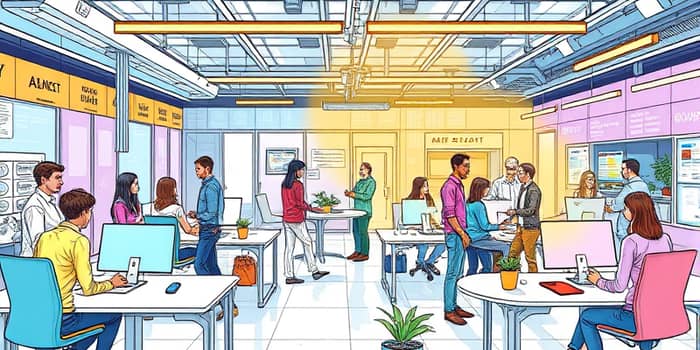
The world of work is undergoing a seismic shift. Driven by technological advancements and societal changes, the landscape is transforming rapidly.
This evolution presents both challenges and opportunities. The future demands proactive adaptation for all stakeholders involved.
Understanding these trends is essential for survival. Strategic agility becomes a competitive necessity in this new era.
Core Trends Shaping the Work Environment
Several key trends are emerging from 2026 forecasts. They are reshaping how we think about employment and investment.
- Operationalizing flexible work models is now critical. Companies are moving beyond pilots to implement structured schedules.
- Digitized workflows serve as the AI foundation. High-performers leverage AI to redesign processes for efficiency.
- Skills-first approaches over job titles are gaining momentum. Skills are treated as the atomic unit of work.
- AI acts as an assistant, not a replacement. Investments focus on enhancing human capabilities and cognitive skills.
- Talent shortages and enhanced mobility are pressing issues. Global gaps in sectors like healthcare demand new solutions.
- People-centered AI builds essential trust. Transparency and co-governance are vital for ethical adoption.
- Burnout prevention is a business priority. Mental health support and flexible schedules boost productivity.
- Economic pressures disrupt traditional models. Slowing growth and rising costs force strategic reevaluations.
- Upskilling and polyworking offer new paths. Employees focus on AI and data skills for autonomy.
- HR tech and automation streamline processes. AI revolutionizes onboarding, payroll, and compliance systems.
- Environmental factors reshape work locations. Climate change influences scheduling and office setups.
These trends highlight the need for immediate action. Employers and investors must leverage them strategically.
Strategies for Employers to Thrive
For employers, the implications are profound. Adopting new approaches can lead to significant advantages.
Hiring and retention costs are escalating. Talent shortages require flexible models and skills-based hiring.
Productivity gains through AI integration are substantial. Digitized workflows and time optimization boost output.
Risk management includes burnout prevention. Establishing trust in AI systems is crucial for compliance.
The HR role evolves to operator status. Skills mobility programs build resilience in volatile times.
Gaining a competitive edge requires innovation. Early adoption of four-day weeks attracts top talent.
Employers delaying these shifts face inefficiency and turnover. Adopters gain measurable agility and retention benefits.
- Implement flexible work models like four-day weeks.
- Invest in AI tools for workflow digitization.
- Focus on skills mapping and internal mobility.
- Prioritize wellbeing programs to combat burnout.
- Adapt to environmental changes in work locations.
Opportunities and Risks for Investors
Investors have unique chances in this evolving landscape. Identifying growth sectors is essential for returns.
AI and HR tech present significant growth. With 92% of firms upping AI spend, opportunities abound.
The skills economy is booming rapidly. Platforms for mapping and mobility are crucial investments.
Wellbeing and flexible tech are in demand. Tools for scheduling reduce downstream costs effectively.
Talent platforms thrive amid global shortages. Remote and freelance platforms address mobility needs.
Economic risks require cautious optimism. Slowing growth tempers hype, but AI avoids mass layoffs.
- Invest in AI workflow tools for compounding ROI.
- Support skills mobility platforms as skills change by 2030.
- Fund wellbeing tech solutions to enhance employee satisfaction.
- Explore talent platform innovations for hybrid work models.
- Adopt scenario-based strategies for future-proof investments.
Investors should prioritize digitized and AI-ready firms. They are better positioned for the 39% skills shift.
Key Statistics to Inform Decision-Making
Data-driven insights are vital for understanding change. Here are critical statistics grouped by theme.
- AI and Digitization Stats: 88% of high-performers use AI; 92% increase investments; 75% knowledge workers use AI.
- Skills and Talent Stats: 70% job skills change by 2030; 39% skill sets transformed; skills-firms show +107% placement.
- Work Models Stats: 71% see job security declining; shortages up to 77% in healthcare.
These stats underscore the urgency for action. Leveraging them can guide strategic planning effectively.
Conclusion: Navigating Forward with Confidence
The future of work is unfolding now. Embracing change is essential for success.
Proactive adaptation defines the winners. Integrating flexible models and digitizing workflows builds resilience.
Investors play a crucial role in shaping outcomes. Supporting innovations drives positive change and returns.
The scenarios from the World Economic Forum provide a valuable framework. Preparedness is key in all futures.
In summary, agility and human-centric approaches will prevail. Let this analysis inspire action and confidence.
- Continuously monitor emerging trends and data.
- Foster a culture of innovation and learning.
- Collaborate across sectors for shared solutions.
- Invest in technologies that enhance human potential.
- Stay adaptable to economic and environmental shifts.
References
- https://www.hibob.com/guides/hr-trends-2026/
- https://cake.com/blog/future-of-work-trends/
- https://www.payentry.com/building-a-future-ready-workforce-workplace-trends-to-watch-in-2026/
- https://www.youtube.com/watch?v=GFqhkG07tQU
- https://www.weforum.org/publications/four-futures-for-jobs-in-the-new-economy-ai-and-talent-in-2030/