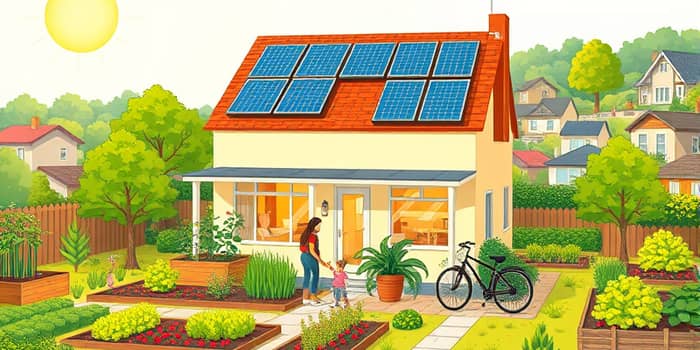
In a world where energy bills soar and climate concerns intensify, sustainable living emerges as a pathway to financial resilience and environmental stewardship. By embracing eco-friendly habits, households and businesses can unlock remarkable savings while fostering a healthier planet.
The journey toward sustainability is not just an ethical choice; it’s an avenue for long-term wealth creation through mindful decisions that benefit both your wallet and the Earth.
Understanding Direct Cost Savings
Adopting sustainable practices translates into measurable financial gains. Research shows that households can save between $1,560 and $3,840 annually by integrating energy-efficient upgrades and waste reduction strategies. For businesses, applying similar methods can lower operating costs by up to 60% while boosting profitability.
On average, American households spend about $1,400 each year on electricity. By replacing incandescent bulbs with LEDs and installing smart thermostats, it’s possible to cut energy bills by nearly 25% and reclaim a significant portion of that expense.
Maximizing Energy Efficiency at Home
Energy efficiency offers a clear path to reduced monthly expenses. Simple behavioral changes—like turning off lights when leaving a room or programming thermostats to match daily routines—can yield savings of up to 9% on energy bills. Over time, these small actions compound into substantial utility bill reductions every year.
Transitioning to renewable energy sources, such as solar panels or community wind programs, further enhances savings. In Northern Ireland, consumers saved a combined £200 million between 2020 and 2023 by shifting to renewables, demonstrating the power of collective commitment to green energy.
Turning Waste into Wealth
Every ton of waste diverted from landfills reduces disposal fees and environmental impact. Large UK office-based companies have slashed waste costs by 70%, saving an average of £24,000 annually through recycling, composting, and process optimization.
At home, reducing food waste alone can save the average U.S. household roughly $1,800 each year. By planning meals, repurposing leftovers, and storing perishables properly, families can transform what was once wasted into significant budget relief.
Leveraging Government Incentives
Governments worldwide are offering grants, tax breaks, and rebates to accelerate the adoption of low-carbon technologies. In the UK, the Boiler Upgrade Scheme provides grants of £5,000–£6,000 for homeowners installing heat pumps or biomass boilers. Such incentives can offset upfront costs and accelerate return on investment.
Additionally, businesses that adhere to emerging environmental regulations avoid penalties and may access further funding opportunities aimed at meeting net-zero targets.
Consumer Trends Fueling Green Markets
Market demand for sustainable products continues to rise. Among Gen Z shoppers, 62% prefer sustainable brands, and 73% are willing to pay a premium for eco-friendly goods. Overall, consumers report they would pay an average of 9.7% more for products with sustainable sourcing or production labels.
This shift drives revenue growth for businesses embracing ethical supply chains. Companies have reported up to a 20% revenue increase on green products, coupled with a 28% boost in customer lifetime value. By communicating sustainability efforts transparently, merchants can also reduce churn rates by 15–20% and boost referrals by 45%.
Investment Trends and Financial Markets
Environmental, social, and governance (ESG) investing has surged, with ESG-focused funds projected to represent half of UK assets by 2025. Investors increasingly expect companies to demonstrate concrete sustainability commitments—80% believe firms should actively address environmental challenges.
ESG leaders have delivered 8% higher ROI than the broader U.S. market, illustrating that purpose-driven investing can yield both positive impact and competitive returns.
Building a Purpose-Driven Career
Workplaces prioritizing sustainability attract top talent. Nearly half of employees want their organizations to incorporate ESG commitments, and one in three young adults have declined job offers due to insufficient environmental practices. Engaged employees at green companies often exhibit higher productivity, leading to reduced turnover and lower recruitment costs.
Pursuing a career aligned with sustainable values not only cultivates personal fulfillment but also contributes to a thriving corporate culture focused on long-term resilience.
Behavioral Insights and Long-Term Adoption
Public motivation for eco-friendly practices often aligns with cost-of-living concerns. Over 70% of people cite saving money as their primary reason for planning sustainable changes, while 75% also value environmental benefits. Encouragingly, more than 90% of individuals who start avoiding food waste or saving energy intend to maintain these habits beyond short-term pressures.
Financial well-being and sustainability are interlinked: 43% of U.S. consumers want banking support to save more, and 22% seek guidance on setting goals that improve finances alongside green choices. Users of platforms like Doconomy have grown their annual savings by over €2,000 by tracking both spending and carbon footprints.
Overcoming Barriers and Embracing Change
While affordability remains a hurdle—62% of U.S. citizens report financial constraints limiting sustainable choices—two-thirds of people indicate they’re willing to make personal compromises for the environment. Lower-income households face greater barriers, but even low-cost actions can deliver substantial impact over time.
By focusing on accessible behaviors—walking instead of driving, switching to reusable items, or growing small herb gardens—anyone can start saving money and carbon emissions today.
Your Sustainable Financial Roadmap
To turn these insights into action, consider the following steps to build resilience, reduce expenses, and protect the planet:
- Install LED lighting and smart thermostats to slash energy consumption.
- Reduce food waste through meal planning, composting, and portion control.
- Explore available grants or tax credits for renewable energy installations.
- Choose eco-friendly products and support brands with transparent supply chains.
- Practice water-saving habits like shorter showers and mindful appliance use.
- Adopt low-cost mobility options such as biking or carpooling for short trips.
By embracing these strategies, you embark on a journey toward greater financial freedom and lasting environmental impact. Small steps today blossom into transformative change tomorrow, proving that sustainable living isn’t just good for the planet—it’s a powerful strategy for personal prosperity.
Begin your sustainable living adventure now and discover how conscious choices can yield both ecological harmony and substantial financial rewards.
References
- https://shiftenvironment.co.uk/news/financial-benefits-of-sustainability/
- https://www.superkynd.com/stories/the-hidden-money-saving-power-of-sustainable-living-a-complete-financial-analysis
- https://firmhouse.com/blog/sustainability-meets-savings-the-long-term-financial-benefits-of-eco-friendly-choices
- https://www.ipsos.com/en-uk/understanding-society/cost-living-sustainable-living
- https://www.oecd.org/en/about/news/press-releases/2023/06/survey-shows-households-are-willing-to-shift-to-greener-lifestyles-but-that-cost-and-convenience-are-key-.html
- https://netzehomes.com/2024/10/14/5-reasons-why-sustainable-living-is-the-future-of-homeownership/
- https://www.deloitte.com/us/en/insights/topics/environmental-social-governance/sustainable-consumer-behaviors.html
- https://www.ent.com/education-center/smart-money-management/eco-friendly-on-a-budget-saving-money-while-saving-the-planet/
- https://www.pwc.com/gx/en/news-room/press-releases/2024/pwc-2024-voice-of-consumer-survey.html
- https://unctad.org/sdg-costing/about
- https://www.doconomy.com/resources/62-of-us-citizens-unable-to-make-sustainable-choices
- https://www.statista.com/statistics/1332451/cost-of-living-preventative-of-sustainable-consumption/
- https://www.mckinsey.com/industries/consumer-packaged-goods/our-insights/consumers-care-about-sustainability-and-back-it-up-with-their-wallets
- https://pmc.ncbi.nlm.nih.gov/articles/PMC9958386/
- https://www.accountingforsustainability.org/en/about-us/why-sustainability.html