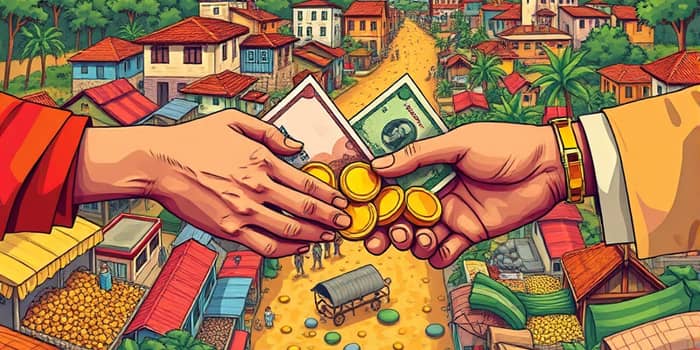
In an era dominated by tap-to-pay, mobile wallets, and contactless transactions, the enduring value of physical currency is often overlooked. Yet, for many around the globe, cash remains the bedrock of daily commerce. The phrase liquidity is king resonates strongly when every bank terminal is down, every smartphone battery dies, or when millions still lack access to digital financial infrastructure.
Recent data underscores this reality: over 1.4 billion adults worldwide remain unbanked, relying exclusively on banknotes and coins to meet basic needs. Understanding when and why cash retains its crown is essential for policymakers, businesses, and consumers alike.
Financial Inclusion & Accessibility
For those without traditional bank accounts, cash provides an indispensable lifeline. It removes barriers, allowing unbanked and underbanked consumers to participate in economic activities without the overhead of account fees, minimum balances, or digital literacy requirements.
- Rural and remote communities with no bank branches
- Low-income households lacking credit history or identification
- Elderly demographics preferring simple tangible currency over digital interfaces
Privacy & Security Advantages
In a world plagued by data breaches and online tracking, cash stands apart. It offers maximum transaction privacy, leaving no digital footprint. Consumers can manage their finances without fear of third-party surveillance or unauthorized data harvesting.
Unlike card payments that create permanent records—ripe targets for hackers—cash transactions are ephemeral. This anonymity fosters trust, especially when purchasing sensitive goods or making charitable donations.
Practical Use Cases
Certain scenarios highlight cash’s unmatched reliability. Small-scale, face-to-face exchanges—like market stalls, bus fare, or tipping service providers—often operate best on a cash basis.
In regions vulnerable to power outages or network disruptions, digital terminals can become inoperable. Here, cash thrives, functioning independently of any infrastructure.
- Farmers’ markets and street vendors
- Pop-up events in storm-prone areas
- Local shops without stable Internet access
Psychological & Behavioral Benefits
Studies from MIT reveal that consumers tend to spend more when swiping credit cards than when handing over bills. The tactile experience of handling notes creates heightened awareness of money’s value.
By physically counting out currency, shoppers engage in a deliberate process of exchange, fostering tangible currency handling and reducing impulsive purchases. This behavioral advantage empowers individuals to stick to budgets and make conscious spending decisions.
Business-Level Considerations
For small merchants with modest transaction volumes, cash can offer a clear pathway to reduced operational costs. It eliminates credit card processing fees and reliance on third-party payment providers.
While larger retailers absorb the costs of armored transport, electronic terminals, and encryption protocols, corner shops and artisans often find cash simpler and more predictable.
Hybrid Payment Models
No single payment method reigns supreme across all contexts. A hybrid payment approach combines the best of both worlds: cash for daily, small-scale purchases, and digital for large or remote transactions.
By offering multiple options, businesses meet diverse consumer needs while ensuring resilience against system failures and enhancing overall satisfaction.
When Digital Payments Reign
Despite its strengths, cash cannot replace digital methods in every scenario. E-commerce, international remittances, and high-value purchases demand the speed, traceability, and convenience of electronic systems.
- Online retail and subscription services
- Automatic recurring bill payments
- Real-time expense tracking and analytics
Conclusion
As the world races toward a cashless future, it is crucial not to discard the centuries-old utility of banknotes and coins. From driving financial resilience in vulnerable communities to safeguarding individual privacy, cash retains unique advantages.
Rather than choosing sides, adopting a balanced ecosystem honors consumer preferences, infrastructure realities, and behavioral economics. After all, when networks falter or digital divides persist, the ongoing relevance of cash ensures that commerce never stops.
References
- https://www.readycreditcorp.com/resources/blog/cash-vs-digital-payments/
- https://www.chase.com/personal/credit-cards/education/basics/the-pros-and-cons-of-digital-payments
- https://www.wavetec.com/blog/pros-cons-of-cashless-society/
- https://www.edvisors.com/money-management/financial-fluency/paying-digitally/
- https://www.financialprofessionals.org/training-resources/resources/articles/Details/choosing-the-right-payment-method-the-pros-and-cons-of-each
- https://www.businessnewsdaily.com/15255-cash-free-society.html
- https://www.jpmorgan.com/payments/payments-unbound/magazine/articles/cashless-society-two-sides