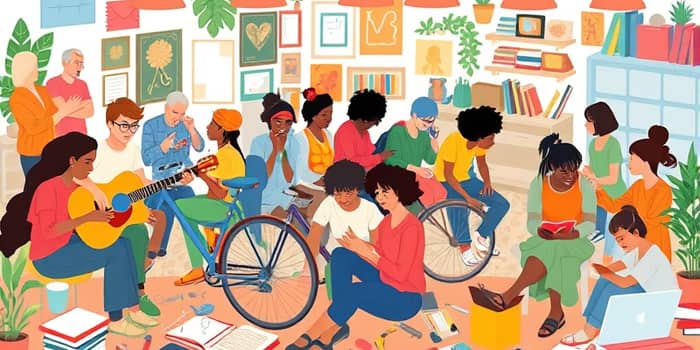
In a world where financial pressures mount daily, the barter economy emerges as a beacon of hope and practicality. By trading skills and services directly, you can unlock a pathway to significant savings and deeper human connections.
This system, rooted in reciprocity, allows you to leverage what you already possess—your time, expertise, and passions—to access what you need. From web development to home cooking, every ability holds value in this exchange, transforming underused talents into tangible benefits.
Imagine reducing your expenses while building a supportive network around you. The barter model empowers individuals to bypass cash transactions and create a more sustainable lifestyle, fostering both economic and social well-being.
A Historical Perspective on Barter
Barter is not a relic of the past but a resilient thread woven through human history. It has served as a fundamental exchange method long before currencies existed, adapting to various cultures and eras.
During times of crisis, barter often resurges as a vital survival tool. For example, in hyperinflation-stricken Venezuela, people turned to bartering for food and medicine when money lost its value. This historical resilience underscores barter's role as a buffer against economic instability.
The 2008 financial crisis further highlighted this, with barter exchanges reporting double-digit growth as confidence in monetary systems waned. Businesses and individuals alike sought alternatives to conserve cash and keep commerce flowing.
Modern organized barter has evolved into a sophisticated tool, with networks facilitating billions in trade annually. According to data, over 450,000 businesses engaged in barter by 2010, demonstrating its enduring relevance in both personal and professional spheres.
How Barter Works in Practice
Barter operates through two primary mechanisms: direct exchanges and organized networks. In direct barter, two parties negotiate a fair trade, but this requires a double coincidence of wants, which can be challenging.
Organized barter exchanges simplify this by introducing trade credits. Participants earn credits for providing services and spend them within the network. This innovative credit system relaxes the need for immediate reciprocal matches, making barter more accessible and efficient.
For individuals, skills bartering spans a wide array of activities. Common examples include tutoring for home repairs, design work for fitness classes, or childcare for car maintenance. These trades often occur through local time banks or digital platforms that facilitate connections.
- Professional skills: Legal advice for accounting services, or coding for marketing support.
- Domestic skills: Cooking, cleaning, or gardening swapped for tech support or language lessons.
- Creative skills: Art, music, or writing exchanged for photography or event planning.
- Educational skills: Tutoring, coaching, or course access traded for social media management.
- Maintenance skills: Plumbing, electrical work, or car repair bartered for home organization or pet care.
These exchanges not only save money but also build trust and community, as participants rely on mutual respect and clear communication.
Benefits of Embracing Skill-Based Barter
Engaging in barter offers a multitude of advantages, particularly for those looking to enhance their financial resilience. By avoiding cash expenditures, you can redirect funds toward other priorities, creating a buffer against economic downturns.
- Cash savings: Directly replace expenses with skill exchanges, reducing reliance on income.
- Access to services: Obtain high-quality services that might otherwise be unaffordable, leveling the playing field for those with limited cash flow.
- Community building: Foster stronger local ties and reciprocity, which can lead to long-term support networks.
- Skill monetization: Turn hobbies or side hustles into valuable assets without upfront investment.
- Flexibility and innovation: Test new business ideas or services in a low-risk environment, building portfolios and references.
For businesses, barter helps conserve cash while utilizing excess capacity or inventory. It can increase sales through new channels and reduce waste by converting unused resources into trade credits. This strategic advantage allows companies to thrive even in competitive markets.
Challenges and Mitigation Strategies
While barter offers many benefits, it is not without its challenges. Valuation disputes and inefficiencies can arise, requiring careful navigation to ensure successful exchanges.
- Inefficiency: Finding suitable matches can be time-consuming, especially in direct barter without mediation.
- Valuation difficulty: Parties may disagree on the relative worth of services, such as comparing an hour of coding to an hour of cleaning.
- Tax complexity: In many jurisdictions, barter transactions are taxable, with fair market value considered income, necessitating accurate reporting.
- Trust and fraud risks: There is a potential for low-quality service or non-delivery, which can undermine trust.
- Fees in organized exchanges: Commissions of 8–15% can reduce net benefits, though they fund essential infrastructure.
To overcome these challenges, use reputable platforms, establish clear agreements in writing, and consult tax professionals. Building a network of trusted partners through repeated interactions can mitigate risks and enhance the barter experience.
The Digital Revolution in Barter
Technology is transforming the barter economy, making it more accessible and efficient than ever before. Digital platforms connect users globally, leveraging algorithms to match skills and needs seamlessly.
The bartering platform market is experiencing steady growth, driven by innovation and shifting consumer behaviors. Below is a table summarizing key market projections:
Key drivers include mobile-first apps, AI-powered recommendation engines, and blockchain technology for enhanced transparency. Consumer trends towards sustainability and the circular economy further propel barter's adoption, as it aligns with resource optimization and shared value models.
- Platform types: Time-banking apps, skill-swap communities, and business-to-business networks.
- Technological advancements: Blockchain for secure ledgers, AI for matchmaking, and user-friendly interfaces.
- Regulatory impacts: Tariff changes, such as those in 2025, encourage barter as a cost-avoidance strategy.
This digital evolution not only expands barter's reach but also enhances trust and efficiency, paving the way for a more integrated future.
Practical Steps to Start Bartering
If you're ready to dive into the barter economy, follow these actionable steps to begin trading skills for savings effectively.
- Identify your marketable skills: List abilities like teaching, designing, repairing, or any expertise you can offer.
- Join barter communities: Seek out local time banks or online platforms such as skill-swap apps to connect with potential partners.
- Start small: Initiate with low-stakes trades to build confidence and establish trust within the network.
- Document agreements: Use simple contracts or verbal confirmations to outline terms, including service scope and timelines.
- Maintain records: Keep logs of exchanges for tax purposes, as barter income may require reporting to authorities.
- Evaluate and adapt: Reflect on each trade's success, learning from experiences to improve future exchanges.
By embracing these practices, you can harness barter's power to enhance your financial autonomy. This timeless exchange system offers a practical solution to modern economic challenges, encouraging creativity and collaboration.
As barter continues to evolve with digital trends, its potential for personal and community growth only expands. Imagine a future where skill exchanges are as common as cash transactions, fostering a more resilient and interconnected society.
In conclusion, the barter economy is more than an alternative to money; it is a transformative approach to living and thriving. By trading skills for savings, you not only protect your finances but also contribute to a culture of mutual support and innovation.
References
- https://www.360iresearch.com/library/intelligence/bartering-platform
- https://www.masterclass.com/articles/barter-economy
- https://en.wikipedia.org/wiki/Barter
- https://corporatefinanceinstitute.com/resources/economics/bartering/
- https://fynk.com/en/blog/bartering-guide-successful-trade-exchange/
- https://www.brookings.edu/articles/the-partial-data-barter-trades-of-the-digital-economy/
- https://datainnovation.org/2021/09/no-the-data-economy-is-not-a-barter-economy/