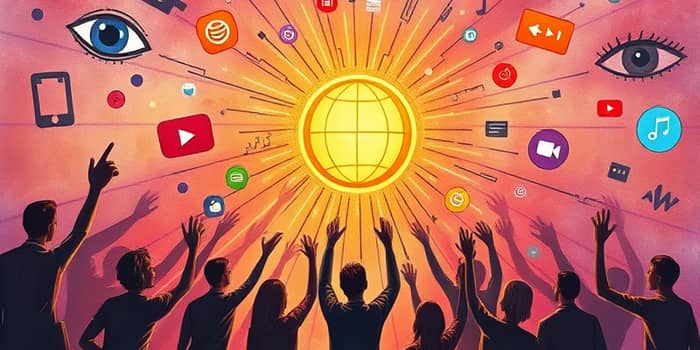
Every moment of human focus has become a valuable commodity. Digital platforms, advertisers, and creators compete for our attention, knowing that in a world overflowing with information, the one resource that remains scarce is focus itself. Nobel laureate Herbert Simon first highlighted this paradox: while data is abundant, attention is limited, making it perhaps the most precious currency of our time.
In this article, we explore how the attention economy shapes modern marketing, the strategies that capture and monetize engagement, and the ethical paths that lead to sustainable growth.
Understanding Attention as Currency
The attention economy views human focus as a finite resource that can be captured, analyzed, and traded. Platforms offer free services—social networks, search engines, streaming apps—in exchange for the time users spend engaging. That attention is then packaged and sold to advertisers aiming to connect services with relevant audiences. In essence, users "pay" with their focus, and platforms like Facebook, YouTube, Instagram, and TikTok act as brokers.
At its core, this model rests on three pillars:
- Scarcity of cognitive capacity: There is only so much information our brains can process at any one time.
- Competition for micro-moments: Every notification, click, or scroll is a chance to win or lose attention.
- Monetization through engagement: Time spent watching, reading, or interacting translates directly into revenue.
How Platforms Capture and Monetize Attention
Platforms employ algorithmic feeds, autoplay features, and personalized recommendations to prolong engagement. These systems are designed to adapt in real time, showing users content that matches their behaviors and preferences. The result is habit-driven scrolling, where each swipe feels effortless but chips away at our limited focus.
Marketers face three core challenges in this environment:
- Cognitive overload from endless streams of content
- Algorithmic prioritization favoring sensational or polarizing material
- Habit-driven micro-moments that fuel short bursts of engagement
To stand out, brands and creators must shift from chasing reach to cultivating depth. Quality of engagement—how long and how meaningfully an audience interacts—now outweighs simple view counts or impressions.
Monetization Strategies for Creators and Brands
Successful monetization in the attention economy relies on a multi-stack revenue strategy that combines several approaches. This diversity not only stabilizes income but deepens audience relationships by offering different forms of value.
Brands and creators can also expand with digital products, webinars, and exclusive community offerings. Remember: 1,000 raving fans beats 100,000 passive followers every time.
The Psychology Behind Attention
Neurological studies reveal that content delivering cognitive value—be it education, entertainment, or emotional resonance—forms positive mental associations. Conversely, intrusive ads can trigger stress responses marked by elevated cortisol levels. Ethical brands aim to alleviate cognitive load, positioning themselves as restorers of attention rather than extractors.
Emotionally resonant messages and contextually relevant experiences are far more memorable than generic interruptions. By prioritizing audience well-being, brands cultivate deeper loyalty and sustained focus.
Actionable Steps to Thrive in the Attention Economy
Transform these insights into practical actions with an ethical framework:
- Build genuine communities through two-way conversations and empathetic listening
- Deliver consistently high-quality content that educates, inspires, or entertains
- Measure metrics like time-on-content, recall rates, and emotional resonance
- Maintain transparency around data use and advertising practices to earn trust
Focusing on these pillars ensures that every moment of attention you capture delivers mutual value.
The Future of the Attention Economy
The next frontier belongs to environments that secure extended focus. Gaming and livestreaming exemplify this trend, offering viewers sustained engagement of 26-47 minutes—a remarkable contrast to fleeting interactions elsewhere. Brands integrating seamlessly into these spaces can build authentic connections and earn more than mere seconds of attention.
Ultimately, success in the attention economy hinges on relevance, emotional resonance, and contextual fit. Brands that integrate rather than interrupt, participate instead of push, and restore attention rather than drain it will lead the charge toward a more considerate digital future.
Conclusion
The attention economy challenges us to rethink value exchange in the digital age. By respecting the scarcity of human focus and offering content that genuinely enriches lives, creators and brands can forge lasting relationships and sustainable revenue streams. Embrace ethical engagement, invest in authentic experiences, and let every moment of attention pave the way for collective growth.
References
- https://instreamly.com/posts/the-attention-economy-definition/
- https://fanhero.com/exploring-innovative-monetization-strategies-for-digital-content/
- https://www.coursera.org/articles/attention-economy
- https://www.supertab.co/post/a-beginners-guide-to-content-monetization-strategies-that-scale
- https://en.wikipedia.org/wiki/Attention_economy
- https://circle.so/blog/content-monetization
- https://www.law.georgetown.edu/denny-center/blog/the-attention-economy/
- https://www.appmaisters.com/in-depth-analysis-monetization-strategies-leading-applications/
- https://advertising.amazon.com/library/guides/attention-economy
- https://www.avenga.com/magazine/media-monetization-strategies-in-2026-monetize-wisely/
- https://www.nngroup.com/articles/attention-economy/
- https://hbr.org/2025/11/how-to-monetize-your-data
- https://globisinsights.com/career-skills/critical-thinking/tconsequences-of-the-attention-economy-and-how-to-regain-control/
- https://www.pwc.com/us/en/industries/tmt/library/transforming-media-monetization.html
- https://www.humanetech.com/youth/the-attention-economy