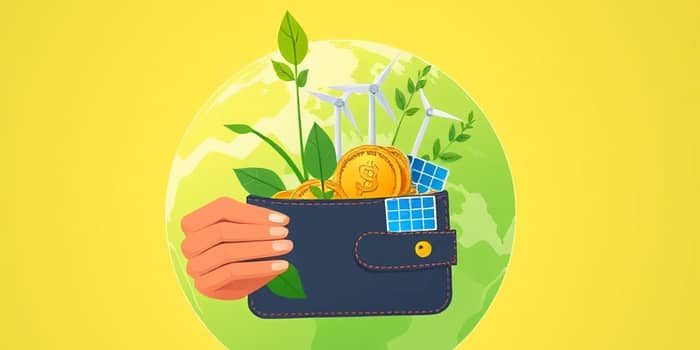
In today's world, every financial choice we make echoes through the environment, shaping our future and the health of our planet.
Sustainable spending is no longer a niche trend but a powerful movement that merges personal and business finance with ecological responsibility.
It empowers you to drive positive environmental impact while reaping economic benefits, turning everyday decisions into acts of global stewardship.
This guide delves into how you can align your spending with sustainability, offering inspiration and practical steps to make a difference.
The Rise of Sustainable Consumerism
Consumers worldwide are increasingly prioritizing eco-friendly products, signaling a shift in market demand.
Recent studies show that 72% of global consumers are willing to pay more for sustainable options.
This willingness reflects a growing awareness of environmental issues and a desire to support responsible brands.
For instance, 34% of consumers are more likely to buy products with sustainable credentials, highlighting trust in ethical practices.
This trend is driven by firsthand experiences, with 85% of US consumers noting climate change effects.
- 78% of US consumers feel better when buying sustainably produced products.
- 22% of global shoppers are sustainability-conscious, up from 18% in 2022.
- 40% are more likely to buy from brands with waste reduction initiatives.
Despite challenges like cost barriers, the momentum is undeniable, offering opportunities for informed choices.
Businesses Embrace Sustainable Procurement
Companies are integrating sustainability into procurement to enhance resilience and drive growth.
Sustainable procurement practices are now adopted by 51% of global businesses, with 45% of public sector organizations including sustainability criteria.
This shift is fueled by the recognition that such practices can boost revenue and reduce risks.
For example, 57% of executives agree that sustainability programs generate higher revenue, with 25% already seeing increases from supply chain efforts.
- 70% of companies view sustainability as a top procurement driver, up from 63% in 2021.
- Sustainable procurement cuts supply chain risk by 25% and landfill waste by 50%.
- It spurs 20% innovation and reduces energy use by 35%.
By 2026, 70% of tech procurement leaders are expected to have sustainability objectives, showcasing a rapid adoption curve.
This proactive approach not only aligns with ethical goals but also fortifies long-term business viability in a competitive landscape.
Economic Impacts and Opportunities
Sustainable spending unlocks significant financial advantages at both macro and micro levels.
Globally, shifting to sustainable practices could save $26 trillion by 2030, demonstrating the vast economic potential.
In the investment realm, ESG assets under management are projected to hit $40 trillion by 2030, representing 25% of total assets.
Products with ESG claims drove 56% of growth over five years, outperforming expectations by 18%.
- Sustainable funds returned a median of 12.6% in 2023, attracting more investors.
- Asia-Pacific public procurement reaches $13 trillion, with leaders like India integrating sustainability into 30% of GDP.
- By 2026, dedicated sustainability budgets will focus on Scope 3 emissions and carbon analytics.
These figures underscore that sustainable spending is not just an ethical choice but a financially smart strategy for growth and stability.
Key Trends for 2026 and Beyond
Looking ahead, 2026 marks a pivotal year where execution takes precedence over ambition in sustainability.
Technological advancements will play a crucial role, with 60% of organizations expected to use generative AI for sustainable strategies.
This AI-driven approach can cut resource consumption by 15%, enhancing efficiency.
Circular economy shifts will become more urgent, focusing on reducing waste and promoting reuse.
- 70% of tech procurement leaders will have sustainability objectives by 2026.
- Sustainability budgets will be essential for ESG reporting and avoiding greenwashing.
- Trends include steady competence in leadership and sustainable debt innovation.
Moreover, collaborative efforts will prioritize areas like electrification and water management, driving systemic change.
Practical Steps for Individuals and Businesses
To harness the power of sustainable spending, both individuals and businesses can take actionable steps.
Start by prioritizing transparent brands that align with environmental responsibility and ethical sourcing.
For consumers, this means researching products and supporting companies with verifiable sustainability claims.
Businesses should integrate ESG criteria into procurement policies and set measurable goals for reduction.
- Individuals: Choose products with minimal packaging and support local, eco-friendly options.
- Businesses: Implement sustainable procurement practices and train employees on ESG integration.
- Both: Advocate for policies that promote circularity and reduce Scope 3 emissions.
Additionally, leveraging frameworks like the GHG Protocol and SBTi can provide structure for progress.
By taking these steps, you contribute to a healthier planet while securing economic benefits.
Conclusion: Embracing a Sustainable Future
Sustainable spending transforms financial decisions into catalysts for environmental and economic healing.
As consumer demand rises and businesses adapt, the path forward is clear: align your wallet with the planet for a brighter tomorrow.
Embrace this journey with confidence, knowing that every choice counts in building a resilient and prosperous world.
References
- https://procurementtactics.com/sustainable-procurement-statistics/
- https://www.atpi.com/why-2026-is-the-year-to-allocate-a-sustainability-budget/
- https://www.arbor.eco/blog/sustainability-statistics
- https://thesustainableagency.com/blog/sustainability-facts-and-statistics-for-business-owners/
- https://www.imd.org/ibyimd/industry/sustainability/sustainability-trends-businesses-must-watch-in-2026/
- https://trellis.net/article/what-will-define-sustainability-2026/
- https://www.sustainabilitybynumbers.com/p/changes-2026
- https://www.iisd.org/articles/explainer/whats-next-sustainable-development-2026-patricia-fuller
- https://www.environmental-finance.com/content/analysis/11-market-trends-set-to-shape-sustainable-debt-in-2026.html?pf=print