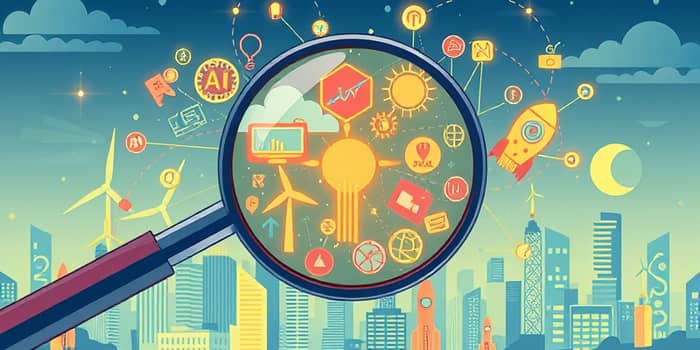
As we approach 2026, a seismic shift is transforming industries worldwide, fueled by technological innovation and policy support.
This evolution opens doors to unprecedented opportunities for visionary businesses ready to adapt and thrive.
From artificial intelligence to renewable energy, these sectors hold untapped potential that can redefine success in the coming years.
The Drivers of Exponential Growth
Multiple forces are accelerating industry expansion across the globe.
Government policies and ESG commitments are creating a favorable environment for sustainable development.
Demographic changes, such as an aging population, are increasing demand in healthcare and senior housing.
Market needs for efficiency and personalization are driving rapid adoption of advanced technologies.
- Breakthroughs in AI and cloud computing enhance capabilities.
- Rising consumer awareness pushes for green and ethical products.
- Post-pandemic focus boosts remote services and health tech.
- Regulatory frameworks evolve to foster competition and innovation.
Artificial Intelligence and Automation: The Cognitive Revolution
AI is becoming a core component of modern business strategy, transforming how we work and live.
It enables smarter decisions and automates tasks in sectors like healthcare, finance, and logistics.
The global AI market is projected to surge from $87.27 billion in 2024 to $647.6 billion by 2030.
This growth is driven by AI integration into daily operations, making it a true partner for enhanced teamwork.
- Applications include predictive analytics in manufacturing and customer service automation.
- Trends highlight AI in security, research, and infrastructure optimization.
- Cloud computing allows small businesses to access powerful AI tools affordably.
Renewable Energy and Clean Tech: Powering a Sustainable Future
The push for sustainability is fueling a boom in renewable energy sources.
Solar, wind, and green hydrogen are leading this charge, with companies like Tesla Energy at the forefront.
Opportunities arise in smart grids and decentralized solutions, spurred by government incentives and consumer demand.
This sector aims to build a resilient and clean energy ecosystem for generations to come.
Financial Technology: Redefining Global Transactions
FinTech is revolutionizing financial services, with $44.7 billion invested in the first half of 2025.
Focus areas include AI-enabled payments, insurtech, and cybersecurity, offering enhanced security and convenience.
For small businesses, embedded finance in e-commerce platforms unlocks new revenue streams.
Tools for compliance and fraud prevention are essential in today's digital economy.
Healthcare and Biotechnology: Personalizing Wellness
Personalized medicine is transforming healthcare, with the market set to grow from $88.21 billion in 2025 to $206.23 billion by 2033.
Genomics, AI therapy matching, and preventive care are central to this evolution.
As baby boomers age, demand for senior housing and tech-enabled care models is surging.
Healthcare automation is also rising, improving efficiency and patient outcomes significantly.
E-Commerce: Expanding the Digital Marketplace
Global e-commerce sales are projected to exceed $8.1 trillion by 2026, driven by giants like Amazon.
AI supply chains and predictive shipping make online shopping faster and more reliable.
Small businesses can thrive using platforms like Shopify for inventory management.
The blend of physical and digital retail creates new, immersive consumer experiences.
Space and Advanced Manufacturing: Exploring New Frontiers
Reusable rockets and satellite constellations are opening space for commercial use.
Companies like SpaceX lead in space logistics and infrastructure development.
Advanced manufacturing, powered by AI and semiconductors, enhances production capabilities.
Opportunities exist in materials science and custom sensor design for various industries.
Emerging Sectors: EdTech, EVs, and Digital Experiences
Education technology is growing with remote learning and AI tutoring tools.
Electric vehicles are gaining traction, with 24% of shoppers very likely to purchase an EV.
Digital experiences, including VR and AR, are creating immersive content ecosystems.
Real estate integrates tech to meet demographic needs, especially in senior housing.
- EdTech offers vocational training and corporate upskilling solutions.
- EV supply chain roles include charging infrastructure and maintenance services.
- Digital platforms like Meta push boundaries in social and educational interactions.
Key Growth Metrics: A Strategic Snapshot
Understanding these projections helps in planning for future investments.
Leading Players: Shaping the Industry Landscape
Key companies drive innovation across these fast-growing sectors.
- Renewables: Tesla Energy, NextEra Energy, Ørsted, Shell Renewables.
- E-Commerce: Amazon, Alibaba, Shopify, Walmart.
- Space/Manufacturing: SpaceX, Blue Origin, Boeing, Lockheed Martin.
- Digital/VR: Meta, Apple, Netflix, Roblox.
These leaders set trends, but there is ample room for new entrants to disrupt and innovate.
Untapped Opportunities: Niche Strategies for Success
Entrepreneurs and small businesses can find lucrative niches in these industries.
- Automation and robotics installation and maintenance services.
- AI and cloud solutions tailored for specific business needs.
- FinTech tools for compliance and cross-border payments.
- EdTech platforms focusing on vocational and hybrid learning.
- Biotech services in genetic testing and personalized nutrition.
- EV-related roles in battery components and charging infrastructure.
Innovative ideas in sustainability and health tech can capture emerging consumer demand effectively.
Navigating Risks: Agility in an Uncertain World
While opportunities abound, it's crucial to manage associated risks.
Economic uncertainty and higher financing costs pose significant challenges.
Insight and agility are essential to navigate the fog over the path forward.
- Monitor regulatory changes and market volatility closely.
- Invest in targeted technologies with quick payback periods.
- Build adaptable business models that can pivot as needed.
Combining technology with innovation can mitigate risks and maximize potential gains.
Conclusion: Embracing a Transformative Future
The industries of 2026 are not just about growth; they're about reshaping our world for the better.
By understanding these trends and leveraging untapped potential, businesses can thrive in a dynamic landscape.
Embrace change, invest wisely, and become a part of the revolution that defines the next decade.
References
- https://www.startupwars.com/fastest-growing-industries/
- https://knowledge.uli.org/en/reports/emerging-trends/2026/emerging-trends-in-real-estate-united-states-and-canada-2026
- https://www.pnc.com/insights/small-business/growing-your-business/industries-expected-to-thrive.html
- https://news.microsoft.com/source/features/ai/whats-next-in-ai-7-trends-to-watch-in-2026/
- https://www.deloitte.com/us/en/insights/industry/manufacturing-industrial-products/manufacturing-industry-outlook.html
- https://www.deloitte.com/us/en/insights/topics/technology-management/tech-trends.html
- https://accountabilitynow.net/business-ideas-2026/
- https://www.ibm.com/thought-leadership/institute-business-value/en-us/report/business-trends-2026
- https://thetechnational.com/17-companies-to-watch-in-2026-redefining-the-future-of-tech-and-innovation/
- https://www.jpmorgan.com/insights/global-research/outlook/market-outlook
- https://www.businessnewsdaily.com/2747-great-business-ideas.html
- https://www.businessinsider.com/tech-trends-to-watch-in-startups-venture-capital-2026