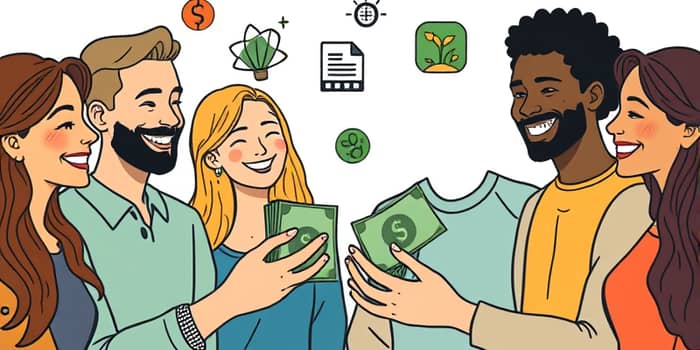
In today's world, marked by economic uncertainty and rising costs, many feel overwhelmed by financial pressures.
Yet, a transformative shift is emerging where people are making conscious choices that reflect their deepest values.
This movement isn't about deprivation; it's about reclaiming control to build a better life.
By prioritizing what truly matters, we can turn financial stress into an opportunity for growth.
The old habits of impulse buying are fading in favor of a more thoughtful approach.
The Economic Backdrop: Why We're Rethinking Spending
U.S. consumer spending growth is projected to slow to 1.5% or 1.8% in 2026.
This deceleration stems from a softening labor market and escalating expenses like healthcare.
Globally, 74% of individuals worry about everyday price hikes, yet 46% have money left over monthly.
Key trends driving this change include a shift from broad cuts to targeted choices.
For instance, 39% plan to spend less in 2026, focusing on selective reductions.
Gen Z leads this charge, with early 2025 spending down 13% in categories like apparel.
Factors influencing spending habits:
- Cooling wage growth and increasing childcare costs.
- Higher property taxes and utility bills adding to financial strain.
- A move towards value retailers such as Dollar General and Dollar Tree.
- The rise of multiprice strategies to cater to budget-conscious shoppers.
This context urges a reevaluation from quantity to quality in spending.
A New Generation Takes the Lead
Gen Z and Millennials are pioneering this movement with significant spending power set to reach $12 trillion by 2030.
They embody a paradox: spending less but demanding more value, with 79% waiting for sales.
Deal hunting is on the rise, with 14% using discount codes regularly.
These generations prefer known brands, but 41% opt for private labels when value aligns.
Holiday plans reveal 82% buying "dupes" and 63% choosing vintage or upcycled items.
They cut spending on restaurants, clothes, and alcohol to protect high-value indulgences.
Behaviors shaping their spending include a blend of digital and physical experiences.
- 61% discover products in-store, reversing the trend toward online dominance.
- 37% shop in-store more for touch-and-feel experiences and holiday atmospheres.
- 43% use social media for discovery, while 39% use it for research.
- 64% have tried Buy Now, Pay Later services, though late payments are increasing.
Wellness and lifestyle are priorities, outspending older generations in these areas.
Millennials, at peak earning, celebrate minorstones or small wins to enhance fulfillment.
Shifting Mindsets: From Guilt to Empowerment
At the heart of this change is underconsumption, a conscious choice to delay purchases or mend items.
It rejects the constant pressure to consume and embraces quality over fast fashion.
Loud budgeting normalizes open money talks, allowing people to share wins and challenges socially.
Feel-good finances align spending with values, such as supporting sustainable brands.
Treat culture evolves to celebrate minorstones, making finances joyful and aligned with personal goals.
Cash is making a comeback for its tangible feel, mixed with apps for better control.
Automation tools rise, intelligently saving for cash flow and ROI over mere loyalty points.
Mindset shifts to embrace include prioritizing emotional and social value over discounts.
- Using cash to enhance spending awareness and reduce card slipperiness.
- Automating savings to focus on long-term financial health and stability.
- Engaging in loud budgeting communities for support and normalization of financial talks.
- Seeking brands with transparency and ethical practices to make informed choices.
These changes foster a sense of empowerment and reduce financial guilt significantly.
Practical Steps to Reclaim Your Finances
Begin by reallocating your budget to trade down on everyday items for meaningful experiences.
For example, choose "dupes" or private labels for routine buys to free up resources.
Embrace selectivity; be brand agnostic until a product offers social validation or exclusivity.
Use budget filters to discern between essentials and treats, positioning indulgences for small wins.
Focus on value through multitier pricing and convenience, avoiding FOMO-driven ads.
Seek transparency from brands to make informed choices that align with your values.
Strategies to implement immediately for a better financial life:
- Audit all subscriptions and cancel those that don't add value to your daily routine.
- Set up automatic transfers to high-yield savings accounts for effortless growth.
- Use cash envelopes for discretionary spending categories to maintain control.
- Research brands for ethical practices and sustainability credentials before purchasing.
- Celebrate financial milestones, no matter how small, to stay motivated and positive.
- Join loud budgeting groups online or in-person for community support and inspiration.
These actions lead to healthier habits and a normalized ability to say no to non-essentials.
The Ripple Effect: What It Means for All of Us
This shift extends beyond personal finance, influencing retailers and broader society positively.
Retailers must adapt by flexing merchandising weekly and using real-time forecasting.
Sustainability and social proof become premium differentiators in a competitive market.
For consumers, reclaiming spending through intentionality supports financial wellness and life alignment.
It leads to a better quality of life, with reduced stress and increased fulfillment over time.
The 2026 outlook indicates that younger cohorts will continue to shape spending trends.
Opportunities for positive change include leveraging social media for authentic storytelling.
- Investing in community-reinvesting banks or ethical funds to support local economies.
- Participating in loud budgeting to destigmatize financial discussions and foster openness.
- Supporting policies that promote affordability and sustainable consumption for all.
- Embracing minorstones to find joy in everyday financial victories and progress.
By making conscious choices, we contribute to a more resilient and equitable economy for everyone.
References
- https://www.pwc.com/us/en/industries/consumer-markets/library/gen-z-consumer-trends.html
- https://porchgroupmedia.com/blog/data-strategy-outlook/
- https://www.retaildive.com/news/consumer-spending-growth-slow-2026/807782/
- https://www.mapscu.com/blogs/money-trends-2025/
- https://www.axios.com/sponsored/5-financial-trends-you-can-bank-on-in-2026
- https://nielseniq.com/global/en/insights/report/2025/consumer-outlook-guide-to-2026/
- https://www.deloitte.com/us/en/insights/industry/retail-distribution/consumer-behavior-trends-state-of-the-consumer-tracker.html
- https://www.salsify.com/blog/shopper-spending-changes-in-2026