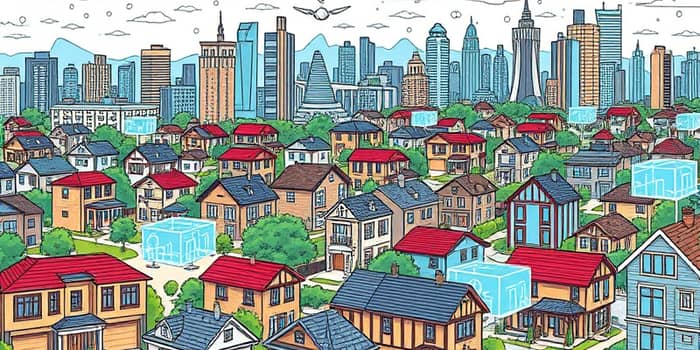
The real estate landscape has undergone a profound transformation in the wake of the pandemic, driven by a mix of structural demand shifts and technology that are redefining how we live, work, and invest.
This new era is marked by evolving consumer preferences, affordability challenges, and rapid technological adoption, creating both opportunities and hurdles for buyers, sellers, and investors alike.
Understanding these trends is crucial for navigating the post-pandemic real estate market effectively, whether you're planning to buy your first home or expand your investment portfolio.
The New Market Landscape: A Slow but Steady Recovery
After the frenzy of the pandemic years, the real estate market is settling into a more measured pace.
Sales volumes are in a slow recovery, not a boom, with projections indicating modest growth ahead.
- Zillow forecasts existing home sales of about 4.1 million in 2025, only 0.8% above 2024.
- National Association of REALTORS expects a 9% rise in home sales in 2025 and 13% in 2026.
Prices have shifted from explosive growth to more modest, uneven increases across regions.
Zillow projects home value growth of +1.7% in 2026, with regional divergences such as California seeing +4.6% in 2025 while the Bay Area faces slight declines.
Mortgage rates, though lower than peak levels, remain a significant drag on affordability.
- Forecasts put average 2025 mortgage rates around 6.3%, far above pre-pandemic levels.
- This keeps many potential buyers on the sidelines, cooling demand in 2025.
Inventory is improving from crisis-level tightness, with a 11.7% boost expected in 2025.
However, the rate-lock effect persists, as owners with low pandemic-era loans are reluctant to sell, constraining supply.
Rents and multifamily markets are also adjusting, with single-family rents projected to rise 2.8% in 2025.
This table highlights key shifts, underscoring the need for strategic planning in today's market.
Shifting Desires: How and Where People Want to Live
The pandemic has permanently altered housing preferences, with suburbs and secondary cities gaining prominence.
Remote work has entrenched, making suburban and smaller metro areas more attractive for their space and affordability.
- Builders are focusing on these markets to meet shifting demand.
- Millennials and Gen Z now dominate the buyer pool, prioritizing energy-efficient and tech-enabled homes.
Urban cores are not collapsing but recalibrating, with mixed-use districts and amenities to stay competitive.
This demographic shift is driving demand for properties that offer walkability, connectivity, and modern amenities.
For practical advice, consider these steps when choosing a location.
- Evaluate commute flexibility and remote work options.
- Look for communities with green spaces and digital infrastructure.
- Assess long-term value in areas with growing tech hubs.
The Affordability Challenge: Central Tension in Post-Pandemic Real Estate
Affordability remains a critical issue, squeezed by high rates and past price gains.
Elevated mortgage rates combined with pandemic-driven increases mean that housing affordability is historically strained.
- Buyers have more leverage but face tight budgets.
- The lock-in effect reduces mobility, as owners with low rates hesitate to move.
Policy responses are emerging to aid first-time and lower-income buyers, though their impact is still evolving.
For timing, autumn 2025 may offer better conditions with less competition and more inventory.
To navigate this, focus on financial preparedness.
- Save for larger down payments to offset high interest costs.
- Explore government programs designed for affordability assistance.
- Consider adjustable-rate mortgages if rates are expected to drop.
Tech Revolution: PropTech and AI Redefining Real Estate
Technology is the defining disruptor, transforming every aspect of real estate from buying to management.
VR/AR and digital twins allow remote property exploration, cutting travel and widening buyer pools.
AI-powered valuation models enable instant cash offers through iBuyers, a trend gaining acceptance among sellers.
- Surveys show 71% of sellers are open to such offers, highlighting comfort with digital transactions.
- Automation through chatbots and AI assistants streamlines inquiries and scheduling.
Blockchain and tokenization are making fractional ownership possible, democratizing access to real estate investments.
In commercial real estate, smart building technology optimizes energy use and occupancy data.
AI is used for predictive maintenance and market forecasting, uncovering new opportunities.
- Digital twins facilitate scenario planning and ESG tracking for complex assets.
- The economic impact is significant, with AI generating billions in efficiency gains.
Real-world deployments, like AI leasing applications, cut completion time by over 50% and improve user satisfaction.
For users, leveraging these tools can enhance decision-making.
- Use virtual tours to shortlist properties without travel.
- Monitor AI-driven market analyses for investment insights.
- Engage with platforms offering tokenized real estate for diversified portfolios.
Rethinking Space: Offices, Retail, and the Hybrid Work Era
The use of space has evolved dramatically, with hybrid work reshaping office and retail landscapes.
Corporate tenants are leveraging VR/AR to tour and visualize spaces before signing, reducing friction.
This shift is leading to more flexible and adaptive building designs.
Owners are repurposing underused areas to enhance tenant satisfaction and retention.
The future lies in creating spaces integrated with technology and community needs.
To adapt, consider these strategies for space utilization.
- Incorporate multi-functional areas in homes for remote work.
- Invest in properties with potential for mixed-use developments.
- Focus on sustainability features to attract eco-conscious tenants.
As we move forward, embracing these trends can help you make informed decisions in a dynamic market.
By understanding the new landscape, leveraging technology, and focusing on affordability, you can navigate the post-pandemic real estate world with confidence.
The key is to stay adaptable and proactive in the face of ongoing change.
Remember, real estate is no longer just about location; it's about innovation, community, and resilience.
References
- https://firstteam.com/blog/market-predictions-for-2025-the-future-of-the-us-real-estate-landscape
- https://futureproptechsummit.com/blogs/how-tech-is-disrupting-the-real-estate-market-in-2025
- https://www.zillow.com/research/home-value-sales-forecast-33822/
- https://crestechnology.com/blog/proptech-2025-top-5-tech-trends-transforming-commercial-real-estate/
- https://www.homebuyersofpittsburgh.com/pittsburgh-real-estate-market
- https://www.inman.com/2025/11/03/five-hot-real-estate-technology-trends/
- https://www.youtube.com/watch?v=O8ncglfBYoY
- https://www.morganstanley.com/insights/articles/ai-in-real-estate-2025
- https://www.nar.realtor/magazine/real-estate-news/sales-marketing/when-will-be-the-best-time-to-buy-a-home-in-2025-hint-its-coming-soon
- https://www.thesisdriven.com/letters/what-real-estate-giants-are-saying-870/
- https://www.pwc.com/us/en/industries/financial-services/asset-wealth-management/real-estate/emerging-trends-in-real-estate-pwc-uli.html
- https://www.nar.realtor/magazine/real-estate-news/ces-2025-best-tech-debuts-for-real-estate
- https://theclose.com/real-estate-charts/
- https://www.sharefile.com/resource/blogs/real-estate-technology-trends