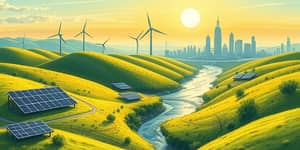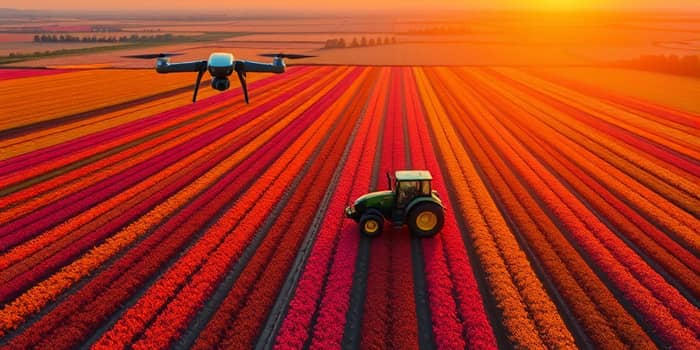
Across the globe, farmers and researchers are embracing transformative tools that promise to protect our planet, safeguard harvests, and ensure every community has access to nutritious food. Precision agriculture stands at the forefront of this revolution.
Understanding Precision Agriculture
Precision agriculture, sometimes called smart farming, is a holistic approach that harnesses advanced technologies to observe, measure, and respond to variability within fields. Instead of treating every plot uniformly, farmers can now make data-driven decision making at scale, tailoring inputs to meet crop needs exactly.
This practice integrates GPS, remote sensing, on-site sensors, and powerful analytics to optimize water, fertilizers, seeds, and pesticides. By managing fields at a granular level, precision agriculture unlocks new levels of efficiency and resilience in the face of climate uncertainty.
Key Technologies Revolutionizing Farming
- GPS and RTK guidance systems for sub-10 cm accuracy in planting and application
- Satellite imagery, drones, and remote sensing for real-time field health monitoring
- In-field IoT sensors tracking soil moisture, nutrient levels, and microclimates
- Auto-steer tractors with machine section control to eliminate overlaps and gaps
- Variable rate irrigation and input application to match specific zone requirements
- Advanced farm management software enabling predictive modeling and yield forecasting
- Solar-powered devices and pumps reducing energy costs and emissions
Measurable Gains and Economic Advantages
Farmers adopting precision methods report significant uplifts in productivity and profitability, thanks to delivering tailored resource management and minimizing waste. By continuously analyzing field data, operations become leaner and more responsive.
These improvements translate directly to the bottom line. Small and mid-sized operations, in particular, see rapid payback on their investment as they refine planting maps, automate irrigation cycles, and reduce manual labor.
Environmental and Sustainability Impacts
By applying inputs only where needed, precision agriculture plays a vital role in minimizing ecological footprint while boosting yield. Excess fertilizers and pesticides no longer wash into waterways, preserving aquatic ecosystems and preventing soil degradation.
Higher efficiency also means fewer greenhouse gas emissions, as tractors waste less fuel and irrigation systems operate with surgical precision. Soil health improves through targeted treatments, while biodiversity thrives under reduced chemical pressure.
Benefits for Businesses and Farmers
- Granular monitoring cuts over-application and waste, reducing input costs
- Enhanced yield stability mitigates risks from unpredictable weather
- Automation of repetitive tasks frees labor for higher-value activities
- Economic resilience strengthened by consistent, higher-quality harvests
- Opportunities for premium pricing on sustainably grown produce
Case studies across vineyards demonstrate disease hotspots mapped within 10 cm accuracy, allowing precise treatment that cuts fungicide use by over 30%. Poultry farms adopting site-specific litter spreading have reduced runoff while enriching soil nutrient profiles.
Strengthening Communities and Food Security
When farms increase efficiency, local markets benefit. Communities gain access to fresh, nutrient-dense foods at lower prices, boosting public health and well-being. Collaborative models share data and resources among neighboring farms, fostering regional food security.
At a global scale, precision agriculture offers a path to feed an estimated 10 billion people by 2050 without expanding farmland. By safeguarding future harvests for generations, we can meet growing demand while preserving forests and grasslands from conversion.
Adoption, Policy Implications, and the Road Ahead
Despite clear benefits, barriers remain: initial equipment costs, training requirements, and access to reliable broadband. Public-private partnerships and government incentives can ease these challenges, ensuring smallholders harness the same innovations as large enterprises.
Policymakers can encourage adoption through grants, low-interest loans, and demonstration programs. Collaboration among agronomists, engineers, and farmers drives innovation, bridging farmers with cutting-edge solutions and creating a resilient food system.
The future holds exciting possibilities: AI algorithms predicting pest outbreaks, blockchain-backed supply chains for full transparency, and networked sensors that adapt dynamically to extreme weather. As these tools mature, full adoption could unlock further yield gains of 6% or more.
Precision agriculture is not merely a collection of gadgets; it represents a shift in philosophy toward stewardship, efficiency, and equity. When stakeholders unite—farmers, researchers, communities, and governments—we cultivate not only healthier crops but a healthier planet.
Now is the time to invest in smart farming. By leveraging technology, we stand poised to secure our food systems, nurture our environment, and ensure every table is filled. Embrace precision agriculture today and be part of a legacy that nourishes the world for generations to come.
References
- https://www.fb.org/market-intel/the-evolution-of-precision-agriculture-and-policy-implications
- https://pvcase.com/blog/how-precision-agriculture-can-benefit-both-businesses-and-communities
- https://pointonenav.com/news/precision-agriculture/
- https://londoncg.com/en/blog/precision-agriculture
- https://www.thomasnet.com/insights/precision-agriculture/
- https://www.aem.org/news/the-environmental-benefits-of-precision-agriculture-quantified
- https://www.ars.usda.gov/oc/utm/benefits-and-evolution-of-precision-agriculture/
- https://geopard.tech/blog/what-is-precision-farming/