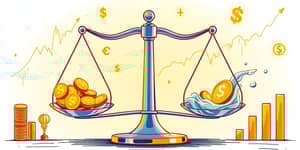
In today’s fast-paced financial world, stories often carry more weight than numbers. Recognizing how narratives shape investor behavior can transform your strategy.
Understanding Market Narratives
At their core, market narratives are compelling stories that shape how investors interpret events and data. These narratives emerge from media reports, social discussions, and high-profile events, and they often override fundamental data to influence asset prices.
When a narrative takes hold, it can create waves of optimism or fear that push prices away from intrinsic value. Nobel laureate Robert Shiller’s theory of narrative economics highlights how viral stories propagate through media and drive collective behavior, challenging the notion of fully efficient markets.
The Psychology Behind the Stories
Narratives tap into emotional and cognitive biases such as confirmation bias, where individuals seek information that supports prevailing stories, and availability bias, which focuses attention on dramatic examples. These biases magnify the impact of narratives on decision-making.
- Confirmation Bias: Interpreting neutral data to fit the dominant story.
- Availability Bias: Overemphasizing memorable events, like EV stock surges, over routine failures.
- Risk Aversion Shifts: Fear-based narratives increase demand for safe assets.
Experiments during the COVID-19 pandemic revealed how optimistic or pessimistic narratives shifted outlooks on market recovery and personal financial choices.
The Lifecycle of a Narrative
Like a classic storytelling arc, market narratives pass through distinct stages before peaking and collapsing. Investors who recognize these stages can anticipate turning points.
Real-World Examples
The power of narratives is evident in recent market moves:
- Interest Rate Narratives: The “higher-for-longer” story drove yields toward 5–7%, then flipped to “immaculate disinflation” without new data.
- Generative AI Hype: ChatGPT’s rapid adoption sparked hopes of a productivity revolution and fears of widespread job loss.
- Commodity Cycles: China-driven commodity stock rallies embodied decade-long optimism, then retracted as demand projections shifted.
Each case shows how narratives can push markets far beyond what traditional models forecast, only to snap back when the underlying story loses momentum.
Harnessing Narratives for Investment
Rather than being swept away by every headline, successful investors learn to exploit narrative-driven inefficiencies:
- Sell or hedge near the narrative peak, when enthusiasm outpaces fundamentals.
- Buy during the early Spark stage by identifying emerging themes before they go viral.
- Use contrarian strategies when negative stories weigh on solid assets.
Building quantitative narrative indicators from media sentiment and search data can uncover opportunities ignored by macro-only models.
Measuring and Tracking Narratives
Advances in data science allow real-time narrative monitoring through tools like GDELT, alternative data feeds, and social media sentiment scores. Key metrics include:
- Media Sentiment Intensity: Strength of positive or negative language.
- Coverage Volume: Number of articles or mentions over time.
- Search Trends: Public interest measured by search engine queries.
Integrating these metrics can boost forecasting power for indices like the S&P 500 and improve risk management during sentiment-driven swings.
Balancing Story and Substance
While narratives offer a window into collective psychology, it’s essential to balance compelling stories with rigorous analysis. Always cross-check narrative-driven price moves against core metrics like earnings, cash flows, and valuation multiples.
Seasoned investors maintain discipline by defining clear entry and exit rules that account for narrative cycles. They also remain vigilant for the first signs of Cracks—contrary news that signals a potential reversal.
Conclusion
Market narratives wield immense influence, shaping expectations and driving volatility. By understanding their mechanics—from initial Spark to final Collapse—you can navigate emotional waves, capitalize on narrative inefficiencies, and protect your portfolio when stories unravel.
Embrace the art of decoding stories, and you’ll gain a powerful edge: the ability to see beyond fleeting hype, align with genuine value, and emerge resilient through every market narrative cycle.
References
- https://www.beutelgoodman.com/the-land-of-stories-how-narratives-shape-the-markets/
- https://papers.ssrn.com/sol3/papers.cfm?abstract_id=3849035
- https://www.spectramarkets.com/lessons/tlmp3/
- https://www.edhec.edu/en/research-and-faculty/edhec-vox/how-do-media-narratives-influence-financial-markets
- https://klementoninvesting.substack.com/p/when-narratives-take-over
- https://research-center.amundi.com/article/shifts-narratives-18-power-narratives-investors
- https://www.financialresearch.gov/the-ofr-blog/2023/12/28/economic-narratives-shape-how-investors-perceive-risks/
- https://www.morningstar.com.au/personal-finance/market-narratives-separating-truth-from-fiction
- https://behaviouralinvestment.com/2019/08/13/why-are-so-many-investment-decisions-based-on-biased-and-contrived-stories/
- https://www.youtube.com/watch?v=y6isEymT5V4
- https://www.bajajamc.com/knowledge-centre/what-is-narrative-investing
- https://one2create.co.uk/blog/narrative-marketing-how-to-craft-stories-that-engage/
- https://www.johnsonfinancialgroup.com/resources/blogs/investment-commentary/investment-commentary-the-power-of-narratives-to-drive-the-market/
- https://www.amati-associates.com/marketing-narrative-a-quiet-and-unexpected-rise/