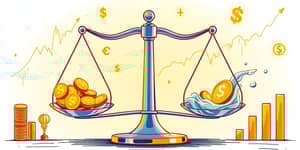
In today’s economic landscape, everyone from policymakers to families struggles to reconcile the official numbers with the reality at the checkout line. Standard inflation measures capture broad movements but can obscure the true cost of living experienced in daily life. By delving deeper than headline indexes, we unlock richer insights and empower better decisions. Understanding these layered dynamics not only guides national policy but also helps households protect their savings and plan for the future with confidence.
Understanding Inflation's Many Faces
The Consumer Price Index (CPI) and the Personal Consumption Expenditures (PCE) Price Index dominate headlines, yet they represent just the starting point. CPI tracks a fixed basket of goods and services, reflecting out-of-pocket expenses like groceries and rent, while PCE adjusts for changing spending patterns, capturing broader health, education, and financial services costs. This subtle shift in weighting often makes the PCE appear lower than the CPI, smoothing out extreme spikes.
CPI is the most familiar measure to consumers, while the PCE captures shifting preferences and substitution effects. The Producer Price Index provides early warnings from manufacturers, tracing cost changes at the factory gate. And the Employment Cost Index highlights how wage and benefit trends feed into the overall inflation picture. Together, these metrics form a multifaceted view of price movements, from raw inputs to household expenses.
Confronting Measurement Biases
Even the most robust indexes contain hidden distortions that can mislead policy and personal decisions. Economists classify three primary biases that exaggerate reported inflation rates:
- bias from outlet substitutions: Indexes often fail to reflect how consumers switch from higher-priced stores to discount retailers or online marketplaces.
- lag in new-product inclusion: The delay in incorporating cutting-edge goods and services, such as smartphones or streaming subscriptions, skews the basket toward older items.
- inadequate methods for quality adjustments: When products improve—think automotive safety features or energy-efficient appliances—adjusting prices to reflect these gains can be challenging.
Research suggests these distortions can cumulatively overstate inflation by about four-tenths of a percent annually. While this may seem marginal, over a decade it represents a significant misalignment between measured and economic inflation, affecting interest rates, wage negotiations, and social program adjustments.
Analytical Tools to Reveal the Trend
To peer through the volatility of monthly price swings, statisticians have developed a suite of analytical measures. Exclusion-based indexes strip out volatile food and energy prices, aiming to capture the underlying inflation trend that guides long-term policy. Alternative methods like trimmed mean and weighted median further filter out extreme price movements, focusing on persistent shifts. Many central banks around the world—Australia, Canada, and the Eurozone, for example—publish these core measures alongside headline rates to inform decision-making.
Decomposition approaches add another layer of insight. By separating tradable from non-tradable goods, or discretionary from essential items, analysts can discern whether inflation is driven by foreign exchange fluctuations, domestic demand surges, or structural cost changes in housing and healthcare. This nuanced view helps tailor policy responses, such as targeting sector-specific interventions instead of broad-based rate adjustments.
- Trimmed Mean: Excludes outliers, offering a stable inflation proxy.
- Weighted Median: Identifies the median price change in the basket.
- Decomposition: Dissects inflation into durable segments for clear diagnosis.
Summarizing Key Measurement Biases
Real-World Impact and Policy Implications
Recent inflationary cycles have underscored the value of these analytical metrics. In the wake of global supply chain disruptions, headline inflation spiked as goods prices soared. Analytical measures quickly revealed a transition: once the initial shock subsided, rising wages and housing costs drove a broad-based increase in services prices. Central banks used trimmed means to discern that the trend was more persistent than temporary shocks, guiding timely policy adjustments.
On the policy front, clearer measures of inflation assist governments in calibrating social benefits, tax brackets, and wage policies to maintain purchasing power without overheating the economy. When communication is rooted in transparent data, public trust strengthens, easing the burden of difficult monetary decisions and building societal resilience in uncertain times.
Taking Control: Practical Steps for Readers
Grasping the intricacies behind inflation is essential for anyone looking to protect their finances and plan effectively. Here are actionable strategies:
- Track Core Measures: Complement CPI readings with trimmed mean or median gauges to spot hidden trends early.
- Build Flexible Budgets: Allocate savings buffers for essentials like energy and groceries, which are prone to volatility.
- Use Technology: Leverage budgeting apps that integrate diverse inflation data for real-time cost tracking.
- Advocate for Clear Metrics: Support initiatives that push for more accurate inflation assessment and improved public reporting tools.
By adopting these practices, households can make informed decisions about mortgages, investments, and consumption patterns, reducing the stress of unexpected price hikes.
Global Perspectives and Future Directions
Inflation measurement is not just a national concern but a global challenge. Across continents, statistical agencies and central banks debate the best methodologies to define “core inflation.” The absence of a standard international framework complicates cross-border comparisons, hindering coordinated policy responses in an interlinked economy. Emerging digital technologies and big data analytics offer hope: real-time price collection from e-commerce and AI-driven quality adjustments promise to enhance accuracy and timeliness.
By fostering collaboration among institutions—from the IMF to regional development banks—economies can share best practices and develop unified guidance. This collective effort will be critical as structural changes like climate shocks, aging populations, and digital transformation reshape consumption patterns and cost structures worldwide.
Inflation is more than a statistic; it is a living force that impacts how we earn, spend, and save. By embracing a richer toolkit of analytical measures and understanding the nuances behind the numbers, we can transform uncertainty into clarity. Let us work together to uncover the hidden dynamics of inflation, build resilient policies, and empower every individual to navigate economic change with confidence.
References
- https://www.heritage.org/monetary-policy/report/measuring-inflation-accurately
- https://www.bls.gov/cpi/questions-and-answers.htm
- https://equitablegrowth.org/why-measuring-inflation-is-surprisingly-challenging/
- https://americanlibrariesmagazine.org/blogs/the-scoop/beyond-inflation-data/
- https://www.bea.gov/resources/learning-center/what-to-know-prices-inflation
- https://www.silvercrestgroup.com/monitoring-inflation-why-the-fed-prefers-pce-over-cpi/
- https://www.stlouisfed.org/publications/regional-economist/july-2013/cpi-vs-pce-inflation--choosing-a-standard-measure%20
- https://www.sifma.org/research/insights/insights-inflation-101