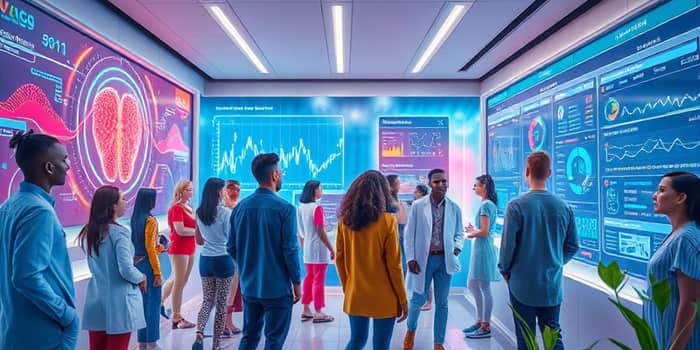
The year is 2026. Across the globe, a silent revolution is reshaping medicine from the inside out. Families are witnessing grandparents who once struggled with chronic ailments reclaiming their independence. Athletes in their seventies set personal bests. Professionals balance demanding careers while optimizing every aspect of their physiology. This new era prioritizes extending vibrant, healthy years for all over mere lifespan.
For Jane, a 52-year-old executive, the journey began with a simple question: “How can I not just live longer, but live better?” Within months of partnering with a forward-thinking clinic, she transformed her risk profile. Routine epigenetic testing unveiled hidden inflammation, while AI-curated nutritional guidance relit the spark in her energy levels. Today, Jane’s story is one among thousands demonstrating that longevity medicine offers more than hope—it delivers tangible, measurable progress.
Longevity medicine has leapt from the fringes of elite biohacking into the clinics of community hospitals and boutique practices. Patients are no longer passive consumers of care; they have become active participants armed with data, insights, and a shared vision of extended vitality. The financial case is equally persuasive: preventive investments now yield a 4.4x return on investment, reducing the burden on healthcare systems and enabling more sustainable models of care.
From Reactive Care to Proactive Wellness
The shift from crisis response to early intervention is perhaps the most transformative trend in contemporary healthcare. Traditional models waited for symptoms to escalate before acting. Today, society is awakening to the reality that 70% of chronic disease costs are preventable. By embracing patient-led, precision-driven healthcare paradigm, practitioners identify risks well before they manifest as diagnosable conditions.
At-home diagnostic kits track key indicators: metabolic flexibility, insulin sensitivity, and nutritional deficiencies. Digital health platforms harness data from wearables and serial lab work to alert both patient and provider to subtle deviations. Armed with these insights, individuals take preemptive steps—adjusting diet, fine-tuning sleep patterns, and integrating targeted supplements—to steer their biology back toward equilibrium.
- Continuous glucose monitoring for personalized metabolic feedback.
- Regular saliva and blood-based epigenetic assessments.
- AI-managed telehealth consultations that dynamically adjust care plans.
Early adopters are experiencing fewer emergency interventions and greater overall satisfaction. Their stories reflect not only improved metrics but also renewed confidence and a deeper sense of agency over their health journey.
Measuring Biological Age
Chronological age is a blunt instrument, often masking the nuanced reality of our physiology. Modern medicine now deploys epigenetic clocks like DunedinPACE and GrimAge to capture the true pace of aging. These tests distill complex molecular patterns into a single rate of biological time, revealing whether our cells are marching ahead or lagging behind.
Remarkably, individuals can modulate their aging rate within months. Lifestyle tweaks—such as targeted exercise protocols, intermittent fasting schedules, and sleep hygiene reforms—demonstrate measurable shifts on epigenetic readouts in as little as 90 days. Organ-specific clocks further refine this approach, highlighting areas like cardiovascular health or immune resilience for focused interventions.
Revolutionary Therapeutics
The pharmaceutical arsenal has expanded to include groundbreaking tools designed explicitly for longevity. GLP-1 receptor agonists, once reserved for type 2 diabetes management, now serve as metabolic resets that spur weight optimization and preserve lean muscle. Clinical data shows these compounds reduce cardiovascular events by 14% and lower diabetes risk by 30% when integrated within comprehensive lifestyle plans.
In parallel, regenerative medicine is bridging science fiction and reality. Trials are underway for adjuvant therapies involving peptides, exosomes, and platelet-rich plasma aimed at rejuvenating tissues and restoring function. Meanwhile, senolytics and epigenetic reprogramming enter clinics to target the root causes of cellular aging, with early applications addressing eye diseases, fibrotic conditions, and metabolic dysfunctions.
- GLP-1 therapeutics for heart and metabolic health.
- Targeted peptides for musculoskeletal regeneration.
- Emerging exosome treatments supporting immune restoration.
- Partial epigenetic reprogramming in pilot clinical trials.
The vision is clear: move beyond symptom suppression to systemic rejuvenation, offering patients interventions that restore youthful function at a molecular level.
Harnessing the Power of the Microbiome
Our gut microbiome has surfaced as a central player in the quest for longevity. Generic probiotic supplements have given way to fiber-rich, microbiome-optimizing nutritional protocols that are uniquely tailored to an individual’s microbial ecosystem. Through AI-enhanced stool analysis, clinicians construct personalized prebiotic and probiotic regimens to bolster diversity, regulate blood sugar, and attenuate chronic inflammation.
Participants in microbiome-optimized programs report striking improvements in mood stability, cognitive clarity, and immune responsiveness. By integrating gut health strategies into longitudinal care models, practitioners ensure that microbial balance supports long-term vitality and complements other therapeutic modalities.
The AI-Driven Clinical Revolution
Data overload is the challenge of modern medicine; artificial intelligence is the solution. Advanced platforms now sift through more than 800 biomarkers to craft individualized health blueprints. These systems rank potential interventions by expected impact, referencing peer-reviewed literature and adjusting priorities as new data emerges.
The operational benefits are equally profound. By automating administrative tasks and synthesizing complex information into intuitive dashboards, AI frees clinicians from repetitive work, restoring more than 15 hours per week for direct patient engagement. AI-driven, holistic clinical decision-making ensures every recommendation is evidence-based, targeted, and continuously refined.
Trends and Impact at a Glance
For those seeking a summary of the innovations propelling the longevity economy, the following table highlights the leading categories:
Bridging Challenges for the Future
Despite robust technological and scientific advances, hurdles remain. Medical training often underemphasizes preventive care, leaving practitioners unprepared to deliver longevity-focused services. Infrastructure constraints, reimbursement models, and siloed data systems further impede widespread adoption.
Addressing these gaps requires concerted efforts: investing in clinician education, developing interoperable health IT platforms, and advocating for policy reforms that reward prevention and long-term outcomes. Collaborative initiatives that unite biotech startups, academic researchers, and payers will be pivotal in scaling these innovations to benefit diverse populations.
Steps to Integrate Longevity Strategies
Individuals eager to embrace this transformative wave can begin with concrete actions. Even minor adjustments today can yield significant dividends for tomorrow’s well-being.
- Schedule a comprehensive biological age assessment.
- Incorporate at-home monitoring tools like CGMs and advanced wearables.
- Adopt plant-forward, fiber-rich dietary patterns for gut and metabolic health.
- Commit to strength training, restorative sleep, and stress resilience practices.
Looking Ahead
The convergence of regenerative therapies, digital health, and precision diagnostics paints a compelling vision for the future. As we continue to refine our understanding of aging mechanisms, each breakthrough brings us closer to unlocking the full potential of human longevity.
Ultimately, the heart of this movement lies in empowerment—giving individuals the tools, insights, and support they need to become architects of their own health destinies. In this new era, longevity medicine is not merely a clinical specialty; it is a testament to our collective aspiration to thrive at every age, forging a legacy of vitality that spans generations.
References
- https://holisticare.io/blog/longevity-medicine-2026-strategy/
- https://www.weforum.org/stories/2026/01/preventive-medicine-longevity/
- https://blog.a4m.com/healthy-holistic-and-happening-now-a-look-at-longevity-trends-for-2026/
- https://www.richardbarker.co/newsletter/healthy-longevity-in-2026-progress-gaps-and-the-path-to-scalable-impact
- https://riograndeguardian.com/premium/stacker/stories/12-longevity-trends-that-doctors-are-watching-in-2026,51745
- https://wewillcure.com/insights/company-profiles/anti-aging-and-longevity-startups-to-watch
- https://milkeninstitute.org/health/future-aging
- https://prenuvo.com/blog/11-exploding-health-trends-you-may-see-in-2026
- https://newsroom.clevelandclinic.org/2026/02/03/cleveland-clinic-survey-finds-americans-optimistic-about-aging-well-but-many-overlook-heart-disease-risks