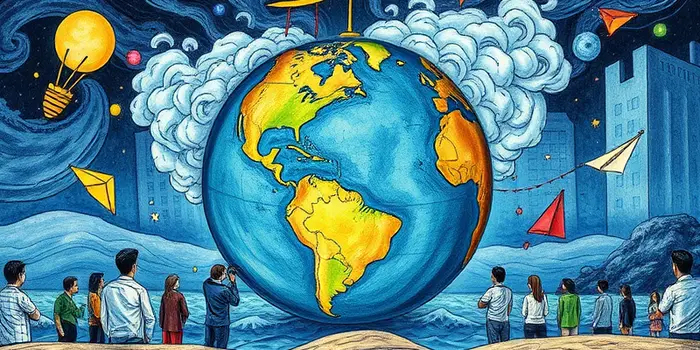
The global economy stands at a crossroads, operating in a low-growth disinflationary environment with limited buffers. Understanding the baseline, identifying looming threats and crafting decisive strategies are vital to safeguarding livelihoods and prosperity.
Understanding the Fragile Baseline
Global economic expansion is running on fumes. The latest UN forecast projects 2.8% global GDP growth in 2025, matching 2024’s pace but trailing the pre-pandemic average of 3.2%. Weak investment, sluggish productivity and high debt limit upside potential.
IMF projections refine the outlook further, expecting growth to slow from 3.3% in 2024 to 3.2% in 2025 and 3.1% in 2026. Advanced economies will expand around 1.5%, while emerging markets hover just above 4%.
The OECD warns of a steady slowdown to 2.9% by 2026. The United States is forecast to grow 1.8% in 2025 and 1.5% in 2026, the euro area 1.2% and 1.0%, and China easing to 4.9% and 4.4%, respectively.
Meanwhile, inflation is decelerating but remains a concern. G20 headline inflation is set to fall from 3.4% in 2025 to 2.9% in 2026, with core rates around 2.5%, still above many central bank targets. Real interest rates sit uncomfortably near zero, constrained by high debt burdens.
Population dynamics add complexity. The global population has reached 8.2 billion, but fertility rates are plunging in advanced economies, leading to ageing and shrinking workforces. In many countries over 25% of citizens are above 65, pressuring pension and healthcare systems.
This stagnant backdrop leaves little room for error. With limited fiscal and policy buffers and debt-to-GDP ratios at historic highs, economies are more exposed to jolts than at any time in recent memory.
Global Growth Projections at a Glance
This concise table highlights modest growth expectations across major economies, underlining structural constraints and persistent headwinds.
The Main Categories of Economic Shocks
Economic disruptions can be grouped into distinct archetypes, each with unique triggers and impacts.
- Policy and trade fragmentation: unpredictable tariffs and export controls raise costs and stall investment.
- Geopolitical and security threats: conflicts and sanctions disrupt energy, commodities and supply chains.
- Financial and sovereign debt crises: high leverage increases the risk of defaults and sudden stops.
- Real-economy disruptions: pandemics, disasters and chokepoints block production and logistics.
- Climate and environmental shocks: extreme weather destroys infrastructure and crops.
- Demographic and structural transitions: ageing populations and youth unemployment threaten stability.
Policy and trade fragmentation is evident in rising US tariffs. By mid-2025, the average effective rate reached 18.2%, the highest since 1934. Supply-chain complexity and uncertainty make long-term planning difficult for firms.
Geopolitical and security threats top risk agendas. Over half of chief risk officers expect an unsettled short-term environment, as conflicts in resource regions drive up oil and gas prices and cut off critical minerals.
High public and private debt levels present a looming threat. According to UN estimates, many low-income countries teeter on the brink of distress. A sudden shift in rate expectations could trigger widespread capital flow reversals and currency crises.
Real-economy disruptions remain persistent. Port congestion, single-source supplier failures and pandemic resurgences can halt production lines, as seen during the semiconductor shortages that paralyzed multiple industries.
Climate hazards compound economic risks. Hurricanes, floods and wildfires demolish crops and transport networks. Insurance losses have reached record highs, and many carriers are retreating from high-risk regions.
Demographic shifts also reshape economies. In advanced markets, rising old-age dependency ratios strain public pensions and healthcare. In emerging regions, creating millions of jobs for young workers is crucial to preventing social unrest.
Transmission Channels Through the Global System
Once a shock hits, its effects cascade globally through interconnected pathways.
- Trade channel: barriers and bottlenecks increase input costs and shrink export revenues.
- Financial channel: risk-off sentiment widens spreads and tightens credit conditions.
- Expectations channel: heightened uncertainty causes firms to delay hires and capex.
- Commodity prices channel: oil and food price spikes squeeze real incomes.
The trade channel directly affects output when tariffs or sanctions raise the cost of imported inputs. Exporters face shrinking markets and revenues, leading to job losses and lower tax revenues.
In the financial channel, sudden stops in capital flows trigger currency devaluations and steep interest-rate hikes. Emerging markets are particularly vulnerable, as higher borrowing costs can derail development projects.
Expectation effects can be even more damaging. Businesses hold off on investments under heightened uncertainty about the future, while households increase precautionary savings and cut spending, further weakening demand.
Commodity price shocks hit net importers hardest, inflating energy and food bills. For low-income countries with large food import bills, even modest price swings can lead to social unrest and political instability.
Identifying Vulnerable Regions and Sectors
Some economies and industries face heightened exposure due to structural factors.
- Low-income and frontier markets with limited access to financing.
- Tourism-dependent nations vulnerable to travel disruptions.
- Manufacturing hubs with exposed global supply chains.
- Agricultural regions sensitive to weather extremes.
Low-income countries often lack fiscal space to cushion shocks. A sudden stop in capital flows forces sharp currency depreciations and interest-rate spikes, undermining public services and social programs.
Tourism-reliant economies risk massive job losses when travel slows. With tourism accounting for up to 20% of GDP, a downturn can plunge millions into unemployment almost overnight.
Manufacturers tied into global supply chains face cascading disruptions when key suppliers or ports fail. Automotive, electronics and pharmaceutical sectors have all experienced costly stoppages in recent years.
Agricultural regions without strong adaptation measures suffer crop failures and soil degradation. Food price spikes feed into poverty and exacerbate migration pressures on urban centers.
Concrete Preparation Strategies for Stakeholders
While shocks are unavoidable, they need not become crises. Proactive measures can build resilience across all levels of society.
Governments should pursue strong fiscal and regulatory cushions by broadening tax bases, maintaining prudent debt ratios and establishing resource-based stabilization funds. Integrating climate risks into public budgets and strengthening social safety nets ensures that the vulnerable are protected during shocks.
Firms can adopt robust risk management frameworks by stress-testing scenarios, diversifying their supplier base and maintaining strategic inventory reserves. Financially, dynamic hedging strategies and sustained liquidity buffers help businesses ride out market turbulence.
Households benefit from building an emergency fund covering six months of expenses and reducing high-cost debt. Upskilling, pursuing continuous learning and exploring side incomes improve employability and adaptability. Staying informed of policy changes and local risk alerts empowers families to act swiftly.
International cooperation amplifies resilience. Shared early-warning data, coordinated policy responses and support for low-income nations through multilateral institutions help prevent localized disruptions from becoming global crises. A collaborative global approach to climate adaptation and technology transfer fosters a more stable future.
A Call to Collective Action
In an interconnected world of rising risks, resilience is our best defense. By acknowledging vulnerabilities, investing in preparedness and fostering cross-sector partnerships, we can transform potential shocks into opportunities for innovation and shared prosperity. Now is the time to act with vision, unity and determination.
References
- https://www.piie.com/blogs/realtime-economics/2025/policy-shocks-and-rising-uncertainty-are-weakening-global-outlook
- https://cashflowfrog.com/blog/recession-strategies-for-business/
- https://desapublications.un.org/publications/world-economic-situation-and-prospects-2025
- https://www.jpmorgan.com/insights/markets-and-economy/economy/how-to-prepare-your-company-for-a-recession
- https://www.weforum.org/stories/2025/08/inflection-points-7-global-shifts-defining-2025-so-far-in-charts/
- https://www.weforum.org/stories/2023/01/davos23-business-prepare-next-crisis/
- https://www.oecd.org/en/about/news/press-releases/2025/09/global-economic-outlook-weakens-as-policy-uncertainty-weighs-on-demand.html
- https://www.alertmedia.com/blog/economic-risk-examples/
- https://www.imf.org/en/publications/weo/issues/2025/10/14/world-economic-outlook-october-2025
- https://sloanreview.mit.edu/article/preparing-your-company-for-the-next-recession/
- https://www.imf.org/en/publications/weo/issues/2025/07/29/world-economic-outlook-update-july-2025
- https://www.aon.com/en/insights/articles/preparing-for-recession-steps-to-protect-a-business
- https://www.jpmorgan.com/insights/markets-and-economy/top-market-takeaways/tmt-shock-absorption-three-signs-the-economy-is-picking-up-from-here
- https://www.kmco.com/insights/navigating-economic-uncertainty-preparing-for-potential-business-slowdowns-in-2025/
- https://www.worldbank.org/en/publication/global-economic-prospects
- https://www.crowdspring.com/blog/small-business-survive-recession/
- https://www.spglobal.com/ratings/en/regulatory/article/global-economic-outlook-q4-2025-global-resilience-battles-us-policy-unpredictability-s101647254
- https://www.eda.gov/resources/comprehensive-economic-development-strategy/content/economic-resilience