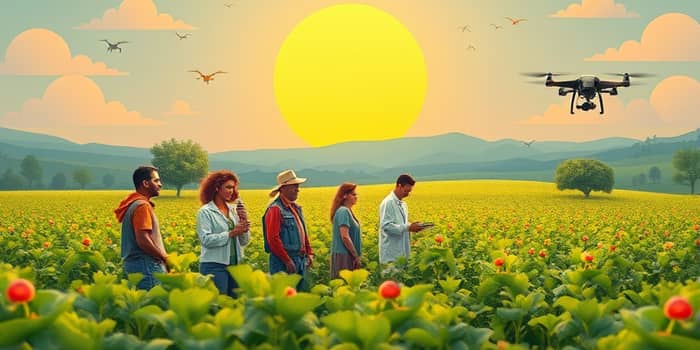
The world stands at a crossroads. While the number of hungry people soars, a wave of innovation and investment brings renewed hope for lasting change. This article explores the challenges and unveils practical strategies to transform adversity into opportunity.
By leveraging emerging technologies and forging strategic partnerships, stakeholders can build resilient food systems that nourish communities and fuel economic growth.
The Alarming Rise in Global Food Insecurity
Since 2016, acute food insecurity has nearly tripled, leaving almost 300 million people hungry. In 2026, some 318 million individuals face crisis levels of hunger or worse, with 41 million at emergency levels and 110 million requiring urgent assistance.
Conflict remains the primary driver of global hunger, displacing families and disrupting markets. Meanwhile, constant climate shocks eroding resilience push fragile communities to the brink, underlining the urgent need for adaptive strategies.
Land degradation fuels deforestation and reduces arable acreage. As agricultural expansion accelerates soil exhaustion, producers confront soaring input costs and diminishing yields, risking further humanitarian crises.
Regional Hotspots and Human Impact
In Afghanistan, protracted conflict and extreme weather have left millions dependent on aid. In Haiti, over half the population—5.7 million people—struggles to secure daily meals. Persistent instability in Syria, Somalia, and South Sudan compounds suffering.
Widespread hunger affects 42 countries with serious or alarming levels of undernourishment. From the famine in Gaza to emergency conditions in Sudan, global statistics translate into real lives disrupted by scarcity and uncertainty.
Market Trends Shaping Agriculture in 2026
Global agricultural markets show moderated price shifts: the World Bank’s index down 2%, beverages down 7%, and input costs remaining high. Wheat and rice prices are easing, while maize holds steady and soybeans gain momentum.
Economic growth is forecast at 2.6%, slightly lower than 2025. Trade tensions and policy shifts in major economies threaten volatility. Yet stable export flows and strategic reserves can cushion shocks and maintain food availability.
Innovations Powering Sustainable Growth
A new era of agricultural innovation offers tools to intensify production while preserving ecosystems. Farmers, investors, and policymakers can harness these breakthroughs to boost yields and resilience.
- technological breakthroughs in precision farming: Satellite imagery, drones, and sensors guide resource use.
- autonomous machinery guided by artificial intelligence: Robotic harvesters and planters cut labor needs and improve accuracy.
- biochar applications for soil health: Pyrolysis-derived amendments restore fertility and sequester carbon.
- water-efficient irrigation and weather forecasting: Nanotechnology and smart irrigation reduce waste and optimize water delivery.
- financial inclusion for smallholder farmers: Mobile banking and microloans unlock capital for equipment and inputs.
- public-private partnerships for agricultural resilience: Collaboration funds infrastructure, extension services, and market access.
Investing in Resilience and Opportunity
International institutions have mobilized billions to strengthen food systems. The World Bank’s portfolio supports 90 countries, aiming to benefit 327 million people by 2030. Projects range from digital market integration in West Africa to climate-smart agriculture in Jordan and Bolivia.
Targeted investments can yield high social returns. Stakeholders should focus on three core actions:
- Enhancing supply chain infrastructure to reduce post-harvest losses.
- Scaling digital advisory platforms for real-time agronomic support.
- Reforming subsidies to incentivize sustainable practices and fair pricing.
Private sector engagement is critical. Impact investors and agritech startups can co-create solutions that drive both profitability and social impact. Governments, in turn, must streamline regulations and facilitate market entry.
Building a Future Free from Hunger
Addressing food insecurity demands coordinated action. By combining innovative technologies, strategic investments, and inclusive policies, we can forge resilient systems that withstand shocks and uplift communities.
Every stakeholder—farmers, entrepreneurs, donors, and consumers—plays a vital role. Through collective effort, we can turn the tide on hunger and cultivate a future where nutritious food is accessible to all.
References
- https://www.fao.org/emergencies/appeals/global-appeal/en
- https://www.agtechnavigator.com/Article/2026/01/29/ten-trends-that-will-shape-farming-in-2026/
- https://www.worldbank.org/en/topic/agriculture/brief/food-security-update
- https://animalagtech.com/articles/2026-ag-investment-outlook
- https://www.wfp.org/global-hunger-crisis
- https://www.dllgroup.com/en/blogs/blogsoverview/innovative-agriculture-key-trends-for-2026
- https://www.wfp.org/publications/wfp-global-outlook
- https://www.terrainag.com/insights/trends-to-watch-in-2026-from-the-economists-view/
- https://concernusa.org/news/world-hunger-facts/
- https://blogs.worldbank.org/en/developmenttalk/global-agricultural-markets-in-2026--stabilizing-prices--persist
- https://www.usda.gov/about-food/food-safety/food-security
- https://www.fb.org/market-intel/usda-cuts-2025-farm-income-as-weakness-persists-into-2026
- https://www.csis.org/analysis/last-us-hunger-data-what-we-lose-termination-usdas-household-food-security-united-states
- https://agrithority.com/the-state-of-ag-2026-outlook-and-trends/