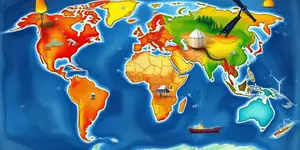
In late 2025, emerging markets have become the central engine of global expansion, offering unparalleled opportunities and challenges. This article explores the key data, drivers, risks, and strategies that define these dynamic economies and their role in reshaping the world.
Macroeconomic Landscape: A Dominant Role
Emerging markets now account for over half of global GDP, representing roughly 51% of total output in 2025. Between 2015 and 2025, they were driving two-thirds of global growth, contributing an astonishing 66.4% of overall expansion. While growth rates have slowed from the heady 5.9% average seen during 2000–2012, EM economies still outpace advanced markets by more than double: projected real GDP growth for EMs stands at 3.7–4% in 2025 versus just 1.4–1.5% for developed peers.
Looking further ahead, forecasts suggest that by 2035 EMs will contribute 65% of global growth, averaging 4.06% annually compared to 1.59% for advanced economies. Notable outliers like South Sudan (24.3% growth) and Guyana (9.3%) exemplify the diversity and potential within this group.
Structural Drivers of Growth
Several foundational trends underpin this robust performance. Understanding them is essential for investors and policymakers alike.
- rapid urbanization and population growth: Sub-Saharan Africa and South Asia lead in demographic expansion, fueling demand across sectors.
- mobile and digital infrastructure leapfrogs: Widespread fintech adoption and mobile internet connectivity have allowed EMs to bypass traditional development stages.
- diverse and fast-growing consumer markets: A burgeoning middle class is driving consumption in retail, real estate, and healthcare.
- renewable energy commitments: Investments in wind, solar, and green hydrogen demonstrate EMs’ dedication to clean energy transitions.
Sectoral Hotspots
Within this broad framework, certain industries stand out as particularly promising drivers of future value creation.
- Clean energy infrastructure integrating solar farms and wind projects.
- Digital services and e-commerce platforms leveraging rising internet penetration.
- Healthcare expansion, from telemedicine to pharmaceutical manufacturing.
Risks and Policy Headwinds
No growth story is without its challenges. Emerging markets must navigate trade tensions, inflationary pressures, and structural obstacles that could dampen momentum.
Trade policy remains a source of uncertainty. Although the US–China truce eased some tensions, average US tariffs rose to 19.5% in 2025, the highest in decades. This environment can delay investment decisions and introduce volatility in export-dependent economies.
Inflationary dynamics also vary widely. Average EM inflation is expected around 5% in 2025, down from 8% in the prior year but still above advanced market targets. Some countries—Bolivia, Ghana, and Turkey—face persistent double-digit rates, while China’s inflation remains flat.
Structural challenges include governance and regulatory gaps, commodity dependence, and uneven investment in research and development. While many EMs have strong domestic demand and improved central bank credibility, fiscal sustainability and capital account restrictions can limit growth prospects.
Regional Highlights and Case Studies
The EM universe is far from homogeneous. A regional breakdown illuminates both standout success stories and cautionary tales.
Across regions, many frontier markets also show promise as infrastructure and technology investments gain traction. These early-stage economies may become tomorrow’s growth stars.
Strategic Implications for Investors
With EMs now commanding attention from global investors, a well-crafted strategy can unlock significant returns while managing inherent risks.
- Develop targeted exposure to high-growth sectors like digital services and renewables.
- Pursue geographical diversification across emerging economies to balance risk and opportunity.
- Integrate macro risk management for trade policy shifts and inflation volatility.
The Road Ahead: Long-Term Themes
Emerging Markets 3.0 hinges on deeper digital integration, urban innovation, and inclusive infrastructure development. By 2035, EMs are set to contribute 65% of global growth and command a larger share of global consumption.
Businesses and investors should focus on ecosystem building—partnering with local firms, addressing regulatory challenges, and targeting unmet consumer needs. Those who position themselves now will reap rewards as EMs reshape the global economy.
In this transformative era, staying informed, agile, and engaged with local developments is essential. The next wave of growth frontiers beckons: the time to act is now.
References
- https://www.triodos-im.com/articles/2025/emerging-markets-mid-year-2025-investment-outlook
- https://www.worldeconomics.com/Regions/Emerging-Markets/
- https://www.home.saxo/en-gb/learn/guides/investment-theme/emerging-market-growth-opportunities-risks-and-the-impact-of-technology
- https://www.fuqua.duke.edu/programs/executive-education/leading-global-business-strategy/emerging-market-outlook
- https://www.visualcapitalist.com/top-countries-by-gdp-growth-in-2025/
- https://hortoninternational.com/emerging-markets-3-0-where-the-next-decade-of-growth-will-come-from/
- https://www.goldmansachs.com/insights/articles/emerging-markets-stocks-and-currencies-are-forecast-to-rally
- https://economy-finance.ec.europa.eu/economic-forecast-and-surveys/economic-forecasts/autumn-2025-economic-forecast-shows-continued-growth-despite-challenging-environment_en
- https://www.vaneck.com/us/en/blogs/emerging-markets-equity/turning-tides-em-equities-are-surging-in-2025/
- https://www.youtube.com/watch?v=4MvJXeLDdZM
- https://www.oecd.org/en/publications/2025/09/oecd-economic-outlook-interim-report-september-2025_ae3d418b.html
- https://www.jpmorgan.com/insights/global-research/outlook/mid-year-outlook
- https://eere-exchange.energy.gov
- https://www.imf.org/en/publications/weo/issues/2025/10/14/world-economic-outlook-october-2025
- https://www.spglobal.com/ratings/en/regulatory/article/economic-outlook-emerging-markets-q4-2025-tariff-impact-still-looms-s101646248
- https://www.microsoft.com/en-us/worklab/work-trend-index/2025-the-year-the-frontier-firm-is-born
- https://www.jpmorgan.com/insights/markets-and-economy/top-market-takeaways/tmt-in-the-rear-view-how-did-our-2025-themes-pan-out
- https://www.franklintempletonglobal.com/articles/2025/etf/from-if-to-where-which-emerging-markets-are-rebounding
- https://bostoncommonasset.com/emerging-markets-in-transition/