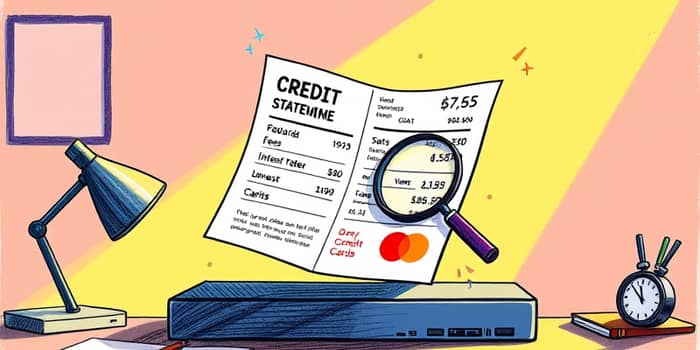
Your credit card statement is more than a list of numbers—it’s a roadmap to understanding your spending, managing costs, and take control of your financial future. By learning to read each section, you’ll unlock insights that help you avoid hidden fees, spot errors, and maximize rewards.
Decoding Your Statement: Why It Matters
Every month, your issuer compiles transactions, fees, payments, and interest into a standardized format. At first glance, the statement appears straightforward, but buried within are details that can affect your credit score, spending habits, and overall financial health.
When you gain clarity on fees, billing cycles, and reward balances, you transform raw data into actionable strategies. Rather than simply seeing a total amount due, you’ll understand how each purchase and fee contributes to that figure. This awareness empowers smarter spending and consistent on-time payments.
Header and Account Details
The top section of your statement provides identifying information and credit limits. Familiarize yourself with each line to avoid surprises:
- Cardholder name and contact details
- Partial card number, credit limit, available credit limit, available cash limit
- Statement period or billing cycle dates
- Statement generation date and payment due date
These details confirm you’re viewing the correct account and understand your spending window. Always check the billing cycle dates to know which purchases apply to your upcoming payment.
Account and Payment Summary
Next, you’ll see a concise breakdown of the previous cycle’s activity. It typically includes:
- Previous balance from prior month
- Payments and credits posted during the cycle
- Total purchases and cash advances
- Fees charged, including late, annual, and over-limit fees
- Interest charged based on APR and daily/monthly rates
- New balance, minimum payment due, and total payment due
- Available credit after posting all activity
The distinction between the minimum payment due and the total payment due is critical. Paying only the minimum may keep your account in good standing, but it can lead to substantial interest over time. To avoid interest by paying your full statement, aim to settle the new balance by the due date.
Transactions History
This section lists each purchase, credit, and adjustment in chronological order. Typical columns include date, merchant name, location or category, reference number, and amount. Review this list carefully:
Grouping by date or type helps you quickly identify any unexpected or duplicate charges. If you spot an entry you didn’t authorize, contact the card issuer immediately to dispute the transaction before the dispute window closes.
Keeping an eye on your transaction history also reveals spending patterns. You might notice recurring subscriptions or impulse purchases that could be trimmed to improve your budget.
Fees and Interest Breakdown
Underneath your transaction list, issuers often provide detailed explanations of fees and interest calculations. Understanding these line items can save you money:
The APR applies to balances carried beyond the grace period. Installment purchases or cash advances may have separate rates and no grace period, meaning interest accrues from the transaction date.
For a deeper perspective, compare consumer fees to typical merchant processing costs in the table below:
While this table reflects merchant-side costs, it highlights how fees accumulate on both sides. As a consumer, you pay interest and penalties. As a merchant, processing fees impact pricing and profitability.
Rewards, Offers, and Fine Print
If you carry a rewards card, your statement will include a summary of points, miles, or cashback earned and redeemed. Look for upcoming expiration dates and redemption thresholds to maximize value.
The fine print section often covers interest calculation methods, how promotional rates expire, and the consequences of late or missed payments. Paying attention here helps you avoid sudden rate hikes and unwelcome penalties.
Practical Tips for Mastering Your Statement
- Review every transaction to spot unauthorized charges or errors early.
- Set up auto-pay for at least the minimum payment to avoid late fees.
- Use budgeting apps to categorize spending and detect patterns.
- Redeem rewards regularly to prevent point expiry and boost value.
- Negotiate lower annual fees or request fee waivers after demonstrating loyalty.
By integrating these strategies, you transform a monthly statement from a source of anxiety into a tool for growth. Each time you examine your statement thoroughly, you strengthen your financial habits and reinforce accountability.
Ultimately, decoding your credit card statement is about more than paying your bill on time. It’s a journey toward financial awareness and informed decision making. Embrace this routine to avoid unnecessary fees, catch errors before they escalate, and optimize every purchase for rewards and benefits.
Next time your statement arrives, dive in. Celebrate the victories—like lower spending or increased savings—and address areas for improvement. With consistency and curiosity, you’ll gain mastery over your credit, build stronger credit scores, and unlock new financial opportunities.
References
- https://www.federal.bank.in/decoding-your-credit-card-statement
- https://www.clearlypayments.com/blog/reading-your-credit-card-statements/
- https://gravitypayments.com/blog/how-to-read-a-credit-card-statement/
- https://www.sumup.com/en-us/business-guide/credit-card-fees-explained/
- https://www.chase.com/personal/credit-cards/education/basics/how-to-read-understand-credit-card-statement
- https://squareup.com/us/en/the-bottom-line/managing-your-finances/credit-card-processing-fees-and-rates
- https://www.patriotsoftware.com/blog/accounting/credit-card-statement/
- https://www.nerdwallet.com/business/software/learn/credit-card-processing-fees
- https://www.bankrate.com/credit-cards/advice/guide-to-reading-your-monthly-statement/
- https://www.youtube.com/watch?v=h72ua8pD9cU
- https://www.equifax.com/personal/education/credit-cards/articles/-/learn/how-to-read-credit-card-statement/
- https://stripe.com/resources/more/credit-card-processing-fees-explained
- https://www.pnc.com/insights/personal-finance/spend/how-to-read-your-credit-card-statement.html
- https://www.consolidatedcredit.org/how-to-use-a-credit-card/statement/
- https://www.capitalone.com/learn-grow/money-management/how-to-read-credit-card-statement/