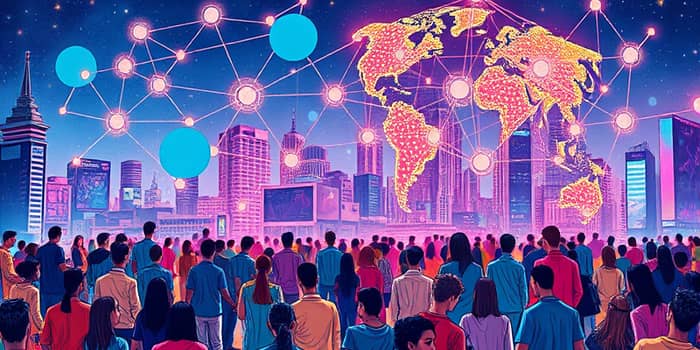
In recent years, a wave of innovation has swept across the financial landscape, challenging traditional institutions and redefining how value is exchanged. At the heart of this transformation lies Decentralized Finance, or DeFi, which empowers individuals to take control of their financial destiny through code and cryptography.
By harnessing blockchain technology, DeFi promises permissionless and programmable blockchains where anyone with an internet connection can participate in a borderless economy without intermediaries.
Understanding DeFi's Core Principles
DeFi embraces transparency and automation through smart contracts that execute predefined conditions without human intervention. This model reduces costs, speeds up transactions, and opens access to a global audience.
Key characteristics that define this paradigm include:
- Self-custody and autonomy: Users control assets via self-hosted wallets and private keys, ensuring personal sovereignty over funds.
- Composable and interoperable protocol stacks: Systems can be stacked and integrated, creating complex financial services from simple building blocks.
- Global, pseudonymous access: No paperwork, no KYC barriers, enabling anyone to join the financial ecosystem.
How DeFi Operates
At its core, DeFi runs on distributed ledgers that record every transaction in a secure, immutable manner. Decentralized applications, or DApps, provide interfaces for users to interact with these protocols.
Common activities in the DeFi space include:
- Borrowing and lending through over-collateralized loans and liquidations, where collateral secures borrowed funds.
- Trading assets on decentralized exchanges that facilitate direct peer-to-peer transactions without central order books.
- Yield farming and staking to earn rewards by supplying liquidity or locking tokens in protocols.
- Insurance and coverage programs that pool risk and automate claims via smart contracts.
- Crowdfunding and token issuance, enabling new projects to raise capital from a distributed investor base.
Market Growth and Projections
The DeFi market has witnessed exponential growth as institutional and retail participants embrace its potential. Estimates vary, but recent projections paint a picture of robust expansion.
Driven by advances like tokenization of real-world assets and institutional-grade infrastructure, DeFi continues to push the boundaries of what is possible in a decentralized economy.
Opportunities and Impact
DeFi’s promise extends beyond yield and speculation. It has the potential to democratize access, reduce systemic risk, and foster financial inclusion worldwide.
Consider these transformative effects:
- Tokenization of real-world assets like real estate and commodities unlocks new liquidity pools.
- Instant settlement and global reach lower transaction costs and speed fund transfers across borders.
- Innovative decentralized governance models give stakeholders a voice through decentralized autonomous organizations (DAOs).
Challenges and Risks
Despite its promise, DeFi faces significant hurdles that require careful navigation. Security vulnerabilities in smart contracts have led to high-profile exploits, and users bear the full responsibility for their private keys.
Regulatory uncertainty also looms large. While some jurisdictions experiment with frameworks that support digital assets, others impose strict oversight that may stifle innovation. Navigating these environments demands open-source software maintained by developer communities and proactive community governance.
Looking Ahead: The Future of Finance
The path forward for DeFi involves greater interoperability, deeper integration with traditional finance, and enhanced user experience. Cross-chain bridges and standardized protocols aim to create a unified network of financial services.
Institutions are exploring tokenized securities and DeFi-based ETFs, signaling that the mainstream adoption of decentralized finance may be closer than ever. These developments will shape a financial ecosystem where trust is established by code, and opportunity is accessible to all.
Conclusion
Decentralized Finance represents a bold vision of a more inclusive, efficient, and transparent financial system. While risks remain, the ongoing innovation and collaborative spirit of the community offer a roadmap for sustainable growth.
For individuals eager to participate, the journey begins with education, experimenting on test networks, and practicing robust security measures. Embrace the learning curve, engage with community-driven projects, and contribute to the evolution of a financial frontier that belongs to everyone.
References
- https://en.wikipedia.org/wiki/Decentralized_finance
- https://www.mordorintelligence.com/industry-reports/decentralized-finance-defi-market
- https://www.coinbase.com/learn/crypto-basics/what-is-defi
- https://www.insightaceanalytic.com/report/decentralized-finance-market/1607
- https://www.fidelity.com/learning-center/trading-investing/crypto/decentralized-finance-defined
- https://www.grandviewresearch.com/industry-analysis/decentralized-finance-market-report
- https://fcnb.ca/en/guides/what-is-defi-and-how-does-it-work
- https://www.technavio.com/report/decentralized-finance-market-analysis
- https://www.bis.org/publ/work1066.htm
- https://www.thebusinessresearchcompany.com/report/decentralized-finance-global-market-report
- https://www.jerseyfinance.com/insights/defi-apps-what-are-they-and-how-is-decentralised-finance-charting-our-future/
- https://www.statista.com/outlook/fmo/digital-assets/defi/worldwide
- https://www.bostonfed.org/publications/risk-and-policy-analysis/2022/decentralized-finance-defi-transformative-potential-and-associated-risks.aspx
- https://aws.amazon.com/marketplace/pp/prodview-pzyxqcijnvwmq
- https://www.weforum.org/stories/2025/10/decentralized-finance-financial-markets-in-practice/