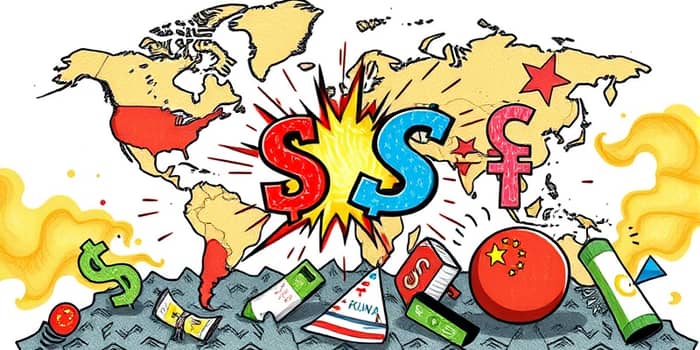
In the intricate web of global economics, currency wars represent a covert struggle where nations deploy monetary policies to weaken their currencies, aiming for competitive edges in trade and investment.
This phenomenon, known as competitive devaluation, often triggers retaliatory measures, leading to a cycle of instability that can ripple through markets worldwide.
By delving into its mechanisms and impacts, we can better prepare for the financial turbulence that such conflicts may bring, empowering ourselves in an uncertain world.
Understanding currency wars is essential for anyone involved in finance, business, or international affairs, as they shape economic fortunes and geopolitical dynamics.
Let's explore this complex topic to uncover practical insights and inspire resilience in turbulent times.
Understanding the Mechanisms of Currency Wars
Currency wars occur when countries intentionally devalue their currencies to boost exports and attract foreign capital.
Key tools include central bank interventions like quantitative easing and ultra-low interest rates, which expand the money supply and reduce currency value.
Other methods involve foreign exchange market manipulations and verbal guidance to influence investor behavior.
- Quantitative easing (QE): Large-scale asset purchases that increase liquidity and drive down currency values.
- Interest rate adjustments: Lowering rates to discourage savings and encourage spending abroad, making exports cheaper.
- Direct interventions: Buying or selling currencies in the forex market to artificially influence exchange rates.
- Verbal guidance: Public statements by officials to sway market expectations and achieve desired outcomes.
These actions make exports cheaper for foreign buyers but raise the cost of imports, potentially leading to inflation and trade imbalances.
Such strategies can create export competitiveness overnight, but they also risk triggering retaliatory devaluations from other nations.
This escalates into a global conflict where no one truly wins, as seen in historical examples.
Historical Echoes: From the 1930s to Modern Times
The concept is not new; during the Great Depression, over 70 countries engaged in competitive devaluations.
This "beggar-thy-neighbor" policy contributed to a 25% decline in global trade volume, exacerbating economic woes and deepening the crisis.
In the modern era, from 2010 to 2015, a currency war was coined by Brazil's finance minister, involving major economies like Japan, China, and the United States.
- 1930s: Widespread devaluations deepened the global economic crisis and highlighted the dangers of unchecked monetary aggression.
- 2010-2015: Use of QE and low rates led to financial instability, emerging market volatility, and increased trade tensions worldwide.
- Evolution: Today, currency wars include digital currency competitions and reserve battles, reflecting technological advances and geopolitical shifts.
These historical lessons remind us that such conflicts often backfire, causing more harm than good in the long run.
Learning from the past can help us avoid repeating similar mistakes in the future.
The Dollar's Reign and Its Growing Challenges
The US dollar holds a dominant position, with 58% of global foreign exchange reserves, despite the US accounting for only 15-20% of global GDP.
However, this dominance is under pressure from various fronts, including massive national debt and geopolitical shifts.
- US debt: Over $34 trillion erodes confidence and fuels inflation risks, challenging the dollar's stability.
- Sanctions weaponization: US control of SWIFT has prompted alternatives like China's CIPS and Russia's SPFS, reducing dollar reliance.
- Geopolitical fragmentation: Accelerates de-dollarization through bilateral trade agreements and independent payment systems.
- BRICS initiatives: Push for common currencies or gold-backed systems to reduce dollar dependence and foster multipolarity.
China's Belt and Road Initiative is actively promoting the yuan's internationalization, challenging the dollar's hegemony in global trade.
These challenges signal a potential shift in the global financial order, requiring adaptability from investors and policymakers.
The Digital Frontier: CBDCs and Cryptocurrencies
The battle is extending into the digital realm, with central bank digital currencies (CBDCs) becoming a new battleground.
China's digital yuan, or e-CNY, leads with pilots since 2020, enabling transaction visibility and bypassing traditional dollar systems.
Simultaneously, cryptocurrency adoption is rising, with about 10% of France's population holding crypto, surpassing stock market participation.
- CBDCs: Represent a "war between private and public currencies," enhancing state control and reducing Western dependence.
- Crypto: Decentralized alternatives pressure governments to adapt their monetary policies and embrace innovation.
- AI-driven trading: Potential to accelerate sophisticated currency manipulations in the future, making conflicts more complex.
This digital shift could redefine how currency wars are fought and managed, offering both risks and opportunities.
Embracing technology can help individuals and businesses navigate these changes more effectively.
Economic Fallout: A Table of Consequences
The impacts of currency wars are multifaceted, affecting trade, financial stability, investment, and inflation.
This table illustrates the broad and often detrimental effects on global economies, highlighting the need for cautious navigation.
Understanding these consequences can empower you to make informed decisions in volatile environments.
Geopolitical Tensions and Multipolar Shifts
Currency wars are deeply intertwined with geopolitical rivalries, particularly between the US and China.
The 2018-2020 trade war saw accusations of yuan manipulation, creating escalation spirals that threaten global stability.
- US-China tensions: Tariffs and currency accusations fuel economic conflicts and strain international relations.
- Multipolar shifts: Emerging currency blocs based on the dollar, euro, yuan, and BRICS initiatives reshape global finance.
- China-led alternative: Digitally-enhanced yuan challenges the existing dollar order through initiatives like the Belt and Road.
As power dynamics shift, the world moves towards a more fragmented financial landscape, requiring new strategies for cooperation.
Staying aware of these tensions can help mitigate risks in international trade and investments.
Voices of Authority: Expert Insights
Experts provide valuable perspectives on the nature and implications of currency wars.
Mark Schwarz from Monnaie de Paris emphasizes that reserve battles focus on currency importance in foreign reserves, while digital currencies represent a "war between private and public currencies."
Another perspective notes the temptation to steal growth from neighbors by cheapening currency, which often leads to unintended consequences and global instability.
These insights remind us that ethical monetary practices are crucial for sustainable economic growth and peace.
Listening to experts can guide us in developing more resilient financial systems.
Looking Ahead: Scenarios for the Future
The future of currency wars could unfold in several ways, influenced by technology, politics, and economic pressures.
- Escalation: Regional currency blocs may form, leading to financial fragmentation and higher transaction costs.
- Innovation: Blockchain and CBDCs could redefine competition, potentially stabilizing systems through reduced single-currency risks.
- Triggers: Trade wars, sanctions, and debt crises are key factors that might spark new conflicts and volatility.
- AI enhancement: Advanced algorithms could improve both the tactics and detection of currency manipulations, adding complexity.
By anticipating these scenarios, businesses and investors can adapt strategies to mitigate risks and seize opportunities.
Proactive planning and diversification are essential tools for thriving in uncertain times.
Conclusion: Navigating the Turbulent Waters
Currency wars are a complex and enduring feature of the global economy, with the power to shape fortunes and futures.
To thrive in this environment, individuals and organizations must stay informed and flexible, embracing change with resilience.
Practical steps include diversifying investments, monitoring geopolitical trends, and embracing digital financial tools for better management.
Ultimately, fostering international cooperation and ethical monetary practices is essential for a stable and prosperous world.
Let this knowledge empower you to make informed decisions and contribute to a more resilient global community, where economic conflicts are managed with wisdom and foresight.
References
- https://discoveryalert.com.au/currency-wars-modern-competition-strategies-2025/
- https://www.tradingview.com/chart/BTCUSD/WsWb6nVg-De-Dollarization-and-the-Global-Currency-War/
- https://verifiedinvesting.com/blogs/education/the-currency-wars-how-exchange-rate-battles-shape-global-investment-flows
- https://www.dunham.com/FA/Blog/Posts/currency-wars-trade-tariffs-global-risk
- https://capitalwars.substack.com/p/the-new-currency-wars
- https://tnfx.co/what-is-a-currency-war/
- https://www.economicshelp.org/blog/2475/currency/currency-wars/
- https://www.carnegiecouncil.org/media/series/39/20120126-currency-wars-the-making-of-the-next-global-crisis