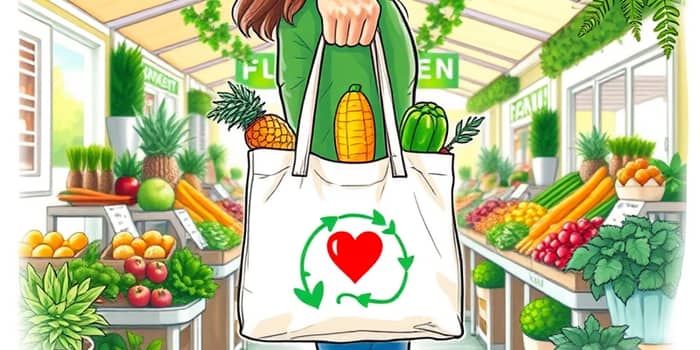
In a world driven by consumerism, a profound transformation is taking place. People are increasingly making deliberate purchasing decisions that prioritize health and environmental sustainability.
This shift, known as conscious consumption, balances ethical practices with economic realities. It is more than a trend; it is a movement reshaping global markets.
The wellness sector, for example, is projected to reach USD 7.32 trillion in 2025, reflecting a deep commitment to well-being.
The Explosive Growth of Conscious Markets
Markets tied to conscious consumption are expanding rapidly. This growth highlights rising demand for healthier and more sustainable options.
Health-conscious foods and snacks alone are expected to grow from USD 96.58 billion in 2023 to over USD 152.5 billion by 2030.
Sustainable products often grow faster than non-sustainable ones. Economies of scale are making them more affordable through incentives.
Other key markets include:
- Vitamins and minerals, rising from USD 29.7 billion in 2023 to USD 44.18 billion by 2029.
- Sports nutrition, increasing from USD 31.1 billion in 2024 to USD 37.1 billion in 2027.
- Digital health, showcasing the role of technology in wellness.
Understanding Consumer Mindsets
Consumer attitudes reveal a strong focus on health and sustainability. Many are actively changing their habits to align with their values.
For instance, 58% of consumers actively try to eat healthy. About 36% are eating less meat to improve their diet.
Globally, 55% are willing to pay more for products that improve society and the environment. This shows a growing ethical consciousness in spending.
- 49% of Americans bought environmentally friendly products last month, up from 43% in 2024.
- 76% would stop buying from companies that neglect environmental or social responsibilities.
- Purchase frequency for healthy functional foods varies, with 23.8% buying 5-6 times a year.
Behavioral shifts are evident, with two-thirds committed to buying only what they need. This helps reduce food waste and promote sustainability.
Trends Shaping 2025 and Beyond
Looking ahead, several trends will define conscious consumption. These include a stronger emphasis on sustainability and innovation.
Key drivers for 2025 include plant-based diets and eco-products. The circular economy and net-zero goals are gaining traction.
- Businesses are pivoting to sustainability for better reputation and brand value.
- Policy changes are supporting this shift, with 530 sustainable consumption policies across 71 countries in 2024.
- Economic influences make sustainable options more affordable, despite some trade-offs.
Generational gaps exist, with younger groups leading lifestyle changes. Regional differences also play a role in adoption rates.
Technological advancements, such as traceability in supply chains, will enhance transparency. This empowers consumers to make informed choices.
Navigating Challenges: Price and Priorities
Despite the enthusiasm, challenges persist. Price remains a significant barrier for many consumers.
Eco-products are often perceived as premium, and inflation affects both sustainable and non-sustainable goods. Consumers may choose cheaper alternatives out of necessity.
- Globally, 60.9% cite high cost as a barrier to sustainable purchases.
- Price is prioritized over nutrition or sustainability in many purchasing decisions.
- Other priorities, such as human rights, can sometimes overshadow environmental concerns.
However, a core group remains willing to pay more for ethical products. This highlights the ongoing balance between values and budgets.
Businesses are responding by making sustainable goods more accessible. Incentives and economies of scale help lower prices over time.
Practical Steps for Purposeful Spending
Embracing conscious consumption does not have to be overwhelming. Start with small, manageable changes to build lasting habits.
First, educate yourself on product origins and impacts. Look for certifications like fair trade or organic labels.
- Prioritize needs over wants to reduce waste and save money.
- Support local businesses to minimize environmental footprints.
- Incorporate more plant-based meals into your diet for health and sustainability.
- Use digital tools to track spending and identify areas for improvement.
- Advocate for corporate transparency and ethical practices in your community.
Remember, every purchase is a vote for the world you want. By aligning spending with values, you contribute to a healthier planet.
Conscious consumption is about making choices that benefit both personal well-being and global sustainability. It is a journey of continuous learning and adaptation.
A Path Forward
The future of consumption is bright with purpose. As markets evolve and consumer awareness grows, the impact will deepen.
Projections show sustained growth in health and wellness sectors. This indicates a long-term shift towards more mindful living.
By overcoming challenges like price barriers, we can accelerate this transition. Collaboration between consumers and businesses is key to driving change.
Embrace conscious consumption as a way to live authentically and responsibly. Your spending power can shape a better world for generations to come.
Start today by reflecting on your purchasing habits. Small steps lead to significant transformations over time.
References
- https://media.market.us/health-conscious-consumer-statistics/
- https://www.sganalytics.com/blog/consumer-sustainability-trends/
- https://theroundup.org/environmentally-conscious-consumer-statistics/
- https://www.deloitte.com/us/en/insights/environmental-social-governance/sustainable-consumption-trends.html
- https://www.pwc.com/gx/en/issues/c-suite-insights/voice-of-the-consumer-survey.html
- https://www.keyesg.com/article/50-esg-statistics-you-need-to-know
- https://www.mckinsey.com/industries/consumer-packaged-goods/our-insights/state-of-consumer
- https://unstats.un.org/sdgs/report/2025/goal-12/
- https://globescan.com/2025/05/14/insight-of-the-week-more-americans-say-they-are-buying-sustainable-products-in-2025/
- https://electroiq.com/stats/environmentally-conscious-consumers-statistics/
- https://www.greenbook.org/insights/focus-on-apac/2025-consumer-insights-prediction
- https://www.forrester.com/blogs/forresters-green-consumer-segmentation-for-2025/