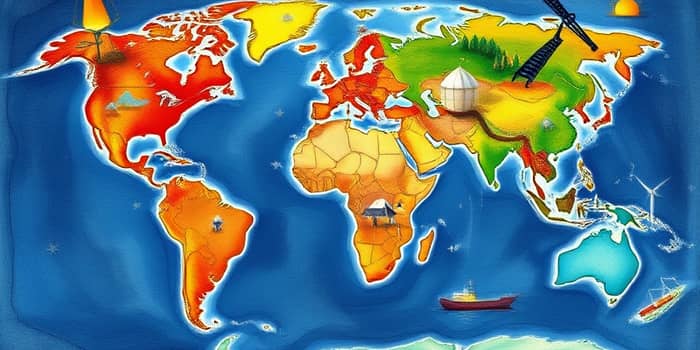
As we enter 2025, the global commodity landscape stands at a pivotal junction shaped by economic uncertainty, technological innovation, and geopolitical currents. Stakeholders across industries must navigate complex forces—from climate risks to supply chain dynamics—to unlock growth and resilience. This article offers an in-depth synthesis of current trends, price forecasts, policy shifts, and emerging avenues for investment.
Global Commodity Trends for 2025
Commodities are under pressure from multiple angles. Markets face heightened risk from geopolitical shifts, sustained trade tensions, and the accelerating impact of climate change. Between March and August 2025, primary commodity prices declined by 2.6%, even as precious metals such as gold posted notable gains. Elevated volatility reflects lingering inflationary pressures and uncertain economic growth forecasts.
Trading volumes have surged in response to these uncertainties, creating opportunities for nimble traders and investors. Inflation trends and currency fluctuations—particularly the strength of the U.S. dollar—continue to sway import costs, driving a near 45% passthrough to global commodity prices in the first two years after currency shifts.
Key Commodity Sectors
- Energy: Oil, natural gas, biofuels, solar, battery storage, and electricity markets are diversifying under decarbonization goals.
- Metals & Mining: Copper, nickel, aluminum, lithium, cobalt, and steel face dynamic demand from the energy transition and industrial output.
- Soft Commodities: Grains (wheat, maize, soybeans, rice), coffee, cocoa, lumber, and palm oil remain sensitive to weather patterns and policy adjustments.
Price Forecasts and Data Analysis
Detailed sector forecasts for 2025 and beyond reveal divergent paths. Oil and gas prices are pressured by weak global demand, while natural gas benefits from U.S. LNG exports and expanding electrification. In metals, battery-critical minerals see robust demand, yet overcapacity in steel presses prices down.
Soft commodities reflect mixed signals: wheat stocks remain comfortable but tightening, soybeans carry the highest stocks-to-use ratio in 17 years, and rice prices have plunged since India removed export restrictions. Maize prices are poised to recover modestly without reaching recent peaks. Precious metals, led by gold, shine bright as investors seek a safe haven amid uncertain markets.
Policy, Macroeconomics, and Geopolitics
Ongoing tariff measures—3% in the U.S., 5% in the EU, 10% in China—continue to suppress demand for bulk commodities, sparing only gold and battery metals. Currency dynamics amplify price swings, with the dollar exerting outsized influence on global trade competitiveness.
Meanwhile, strategic policies focus on securing supply chains for energy and critical minerals. Governments are accelerating environmental regulations, carbon credit schemes, and renewable energy certificates to meet climate commitments. These measures reshape the cost structure for producers and importers alike, driving innovation in financing.
Emerging Investment Opportunities
- Growth in Critical Minerals: Africa, Latin America, and Southeast Asia offer high-potential projects for lithium, cobalt, nickel, and copper mining and processing. Investors can tap green technology and battery manufacturing growth by backing local operations.
- Energy Transition: Solar, wind, biofuels, and electricity trading attract capital. Contract diversification can mitigate price swings and align portfolios with net-zero targets.
- Tech and Industrials: Data center expansion and widespread electrification drive natural gas demand and metals consumption, creating novel commodity flows and financing demands.
- Financial Innovation: Shift toward digital platforms and early payment structures is transforming metals, mining, and agriculture trade finance, reducing reliance on letters of credit.
- Food Security: Partnerships among traders, governments, and multilateral agencies can bolster local production in vulnerable regions, ensuring stable supply chains and social impact.
- Climate Mitigation: Carbon credits, resilience-building technologies, and climate-smart agriculture present growth avenues for sustainable investors.
Risks and Volatility
Geopolitical instability in regions such as the Middle East, Eastern Europe, and parts of Asia remains a wildcard for commodity flows. Market sentiment can shift rapidly, triggering price spikes or collapses, especially in steel and softs. Extreme weather events tied to climate change further threaten production and supply continuity.
Investors and traders must prepare for sudden policy changes, from export bans to carbon levies, that can upend supply-demand balances. Building robust risk management frameworks and flexible contracts is essential.
Strategic Recommendations for Stakeholders
To thrive at this crossroads, companies should diversify exposure across commodity classes and geographies. Leverage scenario planning to stress-test portfolios against currency shifts, tariff regimes, and weather extremes. Embrace digital tools and alternative financing structures to enhance agility and reduce transaction costs.
Form strategic alliances with local partners in emerging markets to secure supply chain resilience and unlock co-investment benefits. Prioritize transparency and sustainability metrics to meet rising stakeholder expectations and regulatory requirements.
Conclusion
2025 marks a transformative year for global commodities, where shifting fundamentals intersect with policy complexities and technological breakthroughs. By combining rigorous data analysis, forward-looking risk strategies, and targeted investments, stakeholders can turn uncertainty into opportunity. The path forward requires vision, collaboration, and the willingness to adapt—only then can we navigate the crossroads and forge a more resilient, sustainable commodity future.
References
- https://www.jpmorgan.com/insights/treasury/forecasting-planning/commodities-market-trends
- https://www.oxfordeconomics.com/resource/five-key-commodity-trends-to-watch-for-in-2025/
- https://www.fastmarkets.com/insights/key-topics/2025-commodity-market-outlook/
- https://www.morganstanley.com/im/en-gb/intermediary-investor/insights/articles/commodity-outlook-2025-three-areas-to-watch.html
- https://www.spglobal.com/commodity-insights/en/news-research/topics/commodities-2025
- https://www.ecfr.gov/current/title-40/chapter-I/subchapter-J/part-300
- https://pmc.ncbi.nlm.nih.gov/articles/PMC10682572/
- https://tradingeconomics.com/forecast/commodity
- https://www.cliffsnotes.com/study-notes/27661912